

Commissioners advance 3.0942 general fund millage in 4-1 vote, citing animal shelter replacement, jail repairs, deteriorating county facilities, road resurfacing and depleted reserves
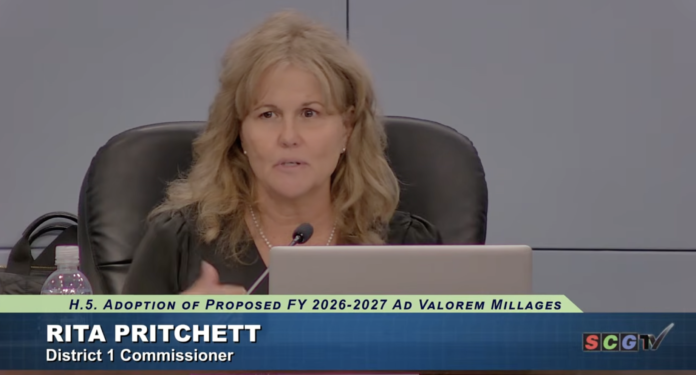
Four days after Gov. Ron DeSantis appointed Rita Pritchett to fill a vacant seat on the Brevard County Commission, she supplied one of the four votes needed Tuesday to advance a higher property-tax rate beyond the county charter’s ordinary revenue limitation.

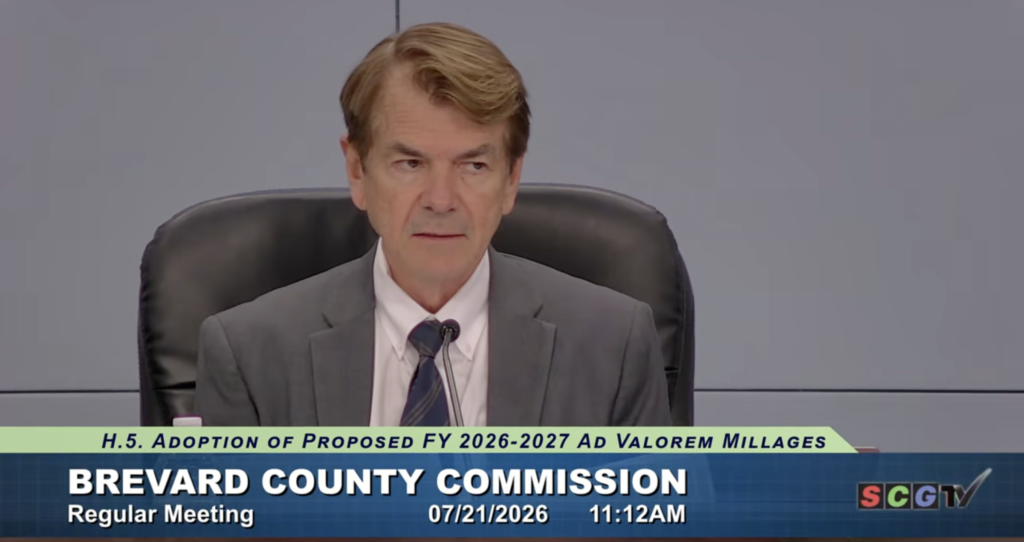
The commission voted 4-1 to set the proposed general fund millage at 3.0942 mills, with Commissioner Rob Feltner casting the lone opposing vote. Pritchett seconded Chairman Thad Altman’s motion and joined Altman, Tom Goodson and Kim Adkinson in supporting it.
The rate is not final. It will appear on the Truth in Millage, or TRIM, notices mailed to property owners in August and will return for public hearings on Sept. 8 and Sept. 22. Commissioners may lower the rate during the remaining budget process, but Altman said increasing it later would require additional notices costing the county approximately $180,000.
Altman described the higher preliminary rate as a way to preserve the commission’s options while the board and public consider what he called the county’s “critical needs.”
“We still have the ability to lower them, but we can’t raise them,” Altman said. “If we were to go with a lower rate, it would box us in.”

Altman identifies nearly $17 million in needs
County administrators initially proposed a county operating millage of 2.8625 mills, slightly below the current 2.8643 rate. Altman instead moved to set the general fund rate at 3.0942 and directed staff to prepare a resolution identifying the emergency or critical needs required to exceed the county charter’s normal tax-revenue limitation.
Altman also asked staff to return with recommendations for allocating approximately $17 million in additional revenue, focusing on public safety, infrastructure and restoring reductions made to balance the proposed budget.
The projects and needs he identified included:
- $5 million toward replacing the county animal shelter.
- $3.5 million for infrastructure needs at the Brevard County Jail.
- $3 million for the County Government Center North and other facility repairs.
- $1.6 million for road resurfacing.
- $2.4 million to restore county reserves.
- Additional funding connected to the Tax Collector’s implementation of voter-approved School Board millages.
Altman placed the total at approximately $16.8 million and called it a starting point for further discussion.
He offered a particularly graphic description of conditions at the County Government Center North, saying he had visited the facility several months earlier when “raw sewage” was falling near Property Appraiser employees.
“I can’t begin to emphasize the dire straits that that facility is in,” Altman said, calling its condition an embarrassment for a county facility located in the county seat.
Altman also pointed to deteriorating jail infrastructure as a potential threat to the Sheriff’s Office’s ability to safely house inmates and maintain public safety. You can watch this portion of the meeting in the video linked below.
Rate is 10% above rollback
The 3.0942 general fund millage is approximately:
- 8% higher than the current 2.8643 rate.
- 8.1% higher than the county manager’s proposed 2.8625 rate.
- 10% above the 2.8129 rolled-back rate.
The rolled-back rate is the rate calculated to produce approximately the same property-tax revenue from existing property as the previous year, excluding new construction.
For every $100,000 in taxable property value, the difference between the county manager’s proposal and Altman’s rate is approximately $23.17 annually. A property with $300,000 in taxable value would pay approximately $69.51 more under the Altman rate than under the original staff proposal.
Those figures apply only to the county general fund portion of a tax bill. They do not include School Board, municipal, fire, library, recreation or other taxing-district millages.
Altman argued that even at the higher rate, Brevard would maintain the lowest millage among comparable counties in the region and remain below the rate levied in 2023. That comparison was stated during the meeting but was not accompanied by a regional millage table during this portion of the discussion.
Charter requires four-vote finding of critical need
The Brevard County Charter generally limits annual growth in budgeted property-tax revenue to the lesser of 3% or the applicable change in the Consumer Price Index, excluding revenue generated by new construction and certain other changes to the tax roll.
The commission may exceed that limit when a supermajority finds that the additional revenue is necessary because of an emergency or critical need. The required finding must identify the underlying facts and is valid for only one budget year.
With five seats on the commission, four affirmative votes were required. Tuesday’s 4-1 vote therefore reached the threshold by the narrowest possible margin.
Staff is expected to bring the formal critical-needs resolution back at the Sept. 8 tentative budget hearing. The resolution would memorialize the projects and factual findings supporting the decision to exceed the charter limitation.
Pritchett appointed four days before vote
DeSantis announced Pritchett’s appointment on Friday, July 17, filling the District 1 vacancy. The governor’s announcement noted that Pritchett previously served both on the County Commission and the Titusville City Council. It did not reference the pending millage vote.
Pritchett seconded Altman’s motion Tuesday and said she was relieved he had brought it forward.
“I was trying to figure out who I was going to talk to to get a second on that,” Pritchett said, adding that she had spent the weekend studying the county’s financial position.
Pritchett said the general fund’s reserves had fallen below 10% and expressed concern about stormwater and drainage problems in District 1. She also warned that the county needed to establish an adequate revenue base before the possible passage of Florida’s proposed Amendment 3 in November.
Amendment 3 would substantially expand the homestead exemption for non-school property taxes and restrict the remaining use of local property-tax revenue to designated core public needs, including public safety and infrastructure. It will require approval from at least 60% of voters in November.
Pritchett also raised the possibility of reconsidering a local-option gas tax, arguing that tourists would contribute to that revenue source and potentially reduce the amount that must be collected directly from county residents.
“I’m just looking for how much we have to have with those items and figure out how to get there with the least amount of paying to our constituents of what they can afford,” she said. “I completely support that today.”
Feltner casts lone opposing vote
The commission conducted the vote twice after staff requested clarification that the motion included all other millages presented in the agenda, with only the general fund rate being changed. Both votes passed 4-1. Feltner remained the lone commissioner opposed. “Can we clarify something—that you’re asking staff to prepare to exceed the charter cap? That’s where we’re—okay. I just want to be clear on that,” Feltner said before the second vote.
The timing of Pritchett’s appointment is politically notable because the higher rate could not have advanced without four affirmative votes. Her appointment restored the commission to five members only four days before the vote, and she immediately provided the second for Altman’s motion and one of the four votes required to move beyond the charter’s ordinary limitation.
The timing alone does not establish that the appointment was made to affect the millage vote. But the practical result is clear: without the governor’s newly appointed commissioner voting yes, the proposal would have fallen one vote short of the required supermajority.
The final decision will come during the September budget hearings, when commissioners must decide whether to retain the 3.0942 rate, lower it or reject some of the projects Altman identified. Until then, the higher rate will serve as the ceiling presented to Brevard property owners on their August tax notices.
Criminal Defense
Bankruptcy · Evictions
WICKS LAW P.A.
Call or text for
free consult
321-733-2700
Eric Wicks, Esq.
1250 West Eau Gallie Blvd. G
Melbourne, FL 32935
Abogado Wicks habla español