

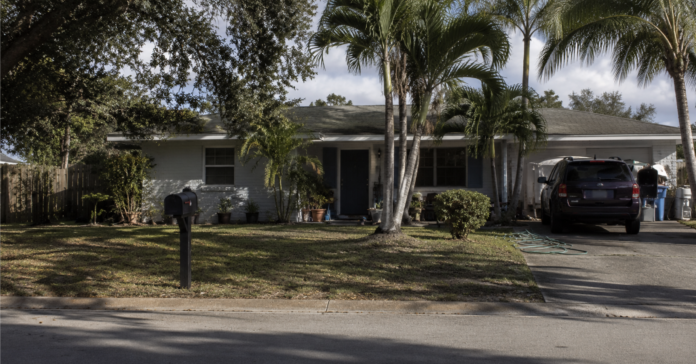
The headline out of South Florida this week is the kind that ends an era: for the first time on record, the Miami metro area costs more to live in than the New York City metro area. Fox Business reported the finding Tuesday, drawing on a Bloomberg analysis of federal figures. No state income tax, and South Florida still costs more than the place people were fleeing.

That story is not about Brevard County. But the same federal dataset it comes from does cover the Space Coast, and what it says about us deserves a harder look than a borrowed headline.
What the federal data actually measures
The comparison comes from Regional Price Parities, an index the U.S. Bureau of Economic Analysis publishes each year for every state and metro area. The national average is set at 100. A score of 110 means prices in that region run 10 percent above the country as a whole.
On the 2024 index, the most recent available, the Miami, Fort Lauderdale and West Palm Beach metro scored 114.155. The New York, Newark and Jersey City metro scored 112.563. That gap, roughly 1.6 points, is the entire basis for the national story.
Two caveats worth keeping straight, because they will come up in the comment section. This is a metro-to-metro comparison, so the New York figure includes New Jersey suburbs that pull the average down. Manhattan on its own remains more expensive than Miami. And the data reflects 2024 conditions, not this summer’s.

Where Brevard sits
The Palm Bay, Melbourne and Titusville metro, which is Brevard County, scored 100.005 on the same 2024 index. Exactly average for the United States. That puts the Space Coast roughly 12 percent below Miami’s price level.
Here is the number that matters more. In 2019, Brevard scored 96.605. In 2023 we hit 101.322, the highest reading in the county’s recorded history, before settling back to par in 2024.
| Year | Brevard price index (100 = U.S. average) |
|---|---|
| 2019 | 96.605 |
| 2020 | 96.782 |
| 2021 | 98.909 |
| 2022 | 99.392 |
| 2023 | 101.322 |
| 2024 | 100.005 |
For most of the last two decades, Brevard ran consistently below the national average. Between 2008 and 2020 the index never once crossed 100. It has now, and the discount that drew retirees, veterans and young families to the Space Coast has effectively closed.
We are not Miami. We are also no longer cheap.
Housing is doing the heavy lifting
Break the index into components and the pressure point is obvious. Brevard’s housing index reached 111.731 in 2024, after peaking at 119.022 in 2023. Overall prices here match the country. Shelter costs more than 10 percent above it.
Sales data tells the same story from the other direction. Figures from the Space Coast Association of Realtors put the single-family median price at roughly $370,000 in the first quarter of 2026, down about 1 percent year over year, with the condo median near $270,000 and falling faster as reserve and inspection requirements reshape that market. Prices have stabilized. They have not retreated to where they started.
And stabilization does not help a first-time buyer much when the Save Our Homes assessment cap resets at the sale. A longtime owner down the street may be taxed on a fraction of what a new buyer will be taxed on for the identical house.
Insurance is the other half of the bill
Florida carries the highest homeowners insurance costs in the country. Statewide averages climbed from roughly $2,520 to $4,480 between 2021 and 2024, an increase near 78 percent in three years, according to industry rate compilations. Brevard sits below the coastal South Florida counties, with county averages reported in the low $4,000s, but well above the national norm.
That is the mechanism worth understanding. Brevard’s overall cost index looks average because groceries, fuel and services here are ordinary. The housing package, meaning mortgage plus taxes plus insurance, is not ordinary. It is the line item quietly consuming the raise you got.
Wages have not moved the same distance
Census five-year estimates put Brevard’s median household income near $75,800. That is above the national median, which is genuinely good news and a real difference from Miami, where typical household income sits about $1,000 below the national figure while prices run 14 percent above it.
Brevard’s aerospace and defense payrolls are the reason. They are also the reason the county’s affordability question is really two questions, one for the engineer at a launch contractor and a very different one for the retiree on a fixed benefit or the service worker in Palm Bay.
What is on the ballot in November
Florida voters will decide a constitutional amendment that could reset the property tax half of this equation. Lawmakers passed HJR 1-F during a June special session, by 75 to 26 in the House and 30 to 9 in the Senate.
If at least 60 percent of voters approve, the homestead exemption on non-school property taxes rises from $50,000 to $150,000 on January 1, 2027, then to $250,000 in 2028, indexed to inflation after that. Senate leadership described it as a framework for eliminating those taxes entirely over time.
The details that get less attention:
- School district levies are carved out completely. Every homeowner keeps paying that portion.
- The annual assessment cap on non-homestead property, meaning rentals, second homes and commercial buildings, drops from 10 percent to 5 percent starting in 2027.
- Anyone establishing Florida residency after December 31, 2026 receives a reduced exemption and waits five years for the full benefit, according to a Tax Foundation analysis.
- Legislative analysts estimate local government revenue losses beginning around $4.6 billion statewide in year one and growing from there.
That last point is where this lands squarely on Brevard’s county commission, city councils and fire districts. The amendment directs remaining revenue toward public safety and schools, but a county 72 miles long with beachside infrastructure, a lagoon restoration obligation and an aging population will have to reconcile the arithmetic somewhere.
What to watch next
TRIM notices go out in August. That document, not a Bloomberg analysis, is the number that will tell Brevard homeowners what the last year actually did to them. The 25-day window to challenge an assessment starts the day it arrives, and appeals run through the Value Adjustment Board. Certification records are posted by the Brevard County Property Appraiser.
The Space Coast Rocket will be covering the millage hearings in September and the amendment campaign through November.
Criminal Defense
Bankruptcy · Evictions
WICKS LAW P.A.
Call or text for
free consult
321-733-2700
Eric Wicks, Esq.
1250 West Eau Gallie Blvd. G
Melbourne, FL 32935
Abogado Wicks habla español