


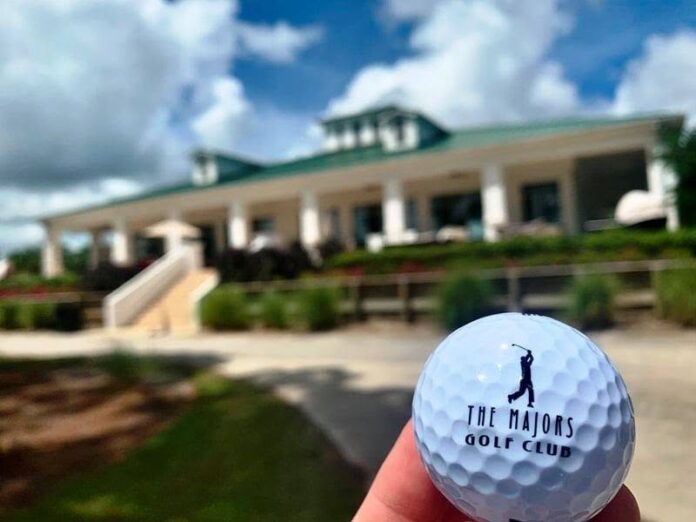
PALM BAY — After eight years of failed negotiations, denied rezonings, petition drives, and packed council chambers full of red shirts, the City of Palm Bay is finally making its move on the former Majors Golf Course.

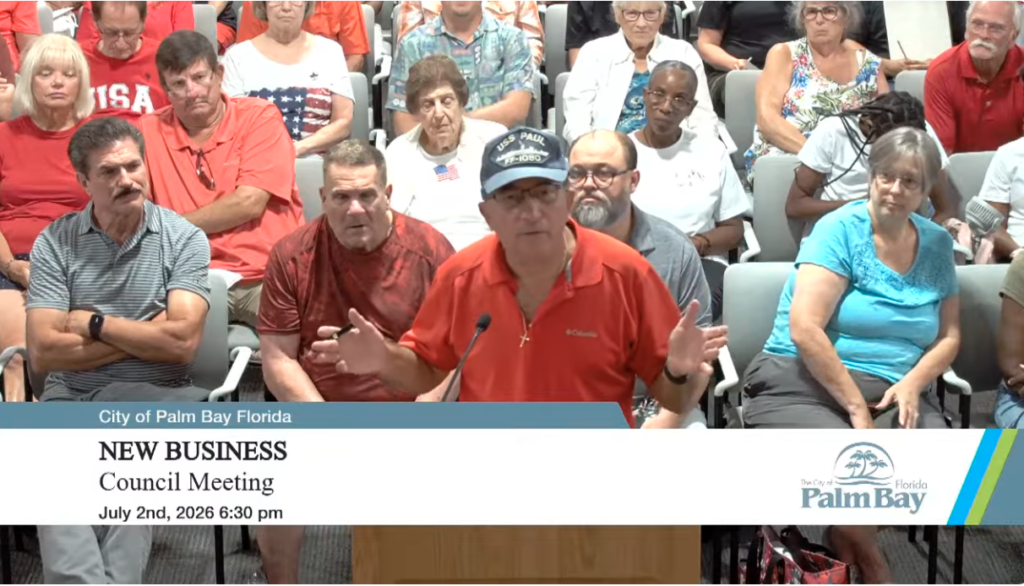
At its July 2 meeting, the Palm Bay City Council voted unanimously to authorize City Manager Matthew Morton, City Attorney Patricia Smith, and the city’s broker, Scott Loveridge of Relentless Real Estate, to negotiate a vacant land contract for approximately 135.19 acres of the defunct Arnold Palmer-designed course at the heart of Bayside Lakes with a purchase price between $8.5 million and $10 million.
The 5-0 vote is the most concrete step the city has ever taken toward publicly acquiring the property, and it comes with a blunt acknowledgment from the dais: if the city doesn’t act now, it may never get another chance.
The Deal on the Table
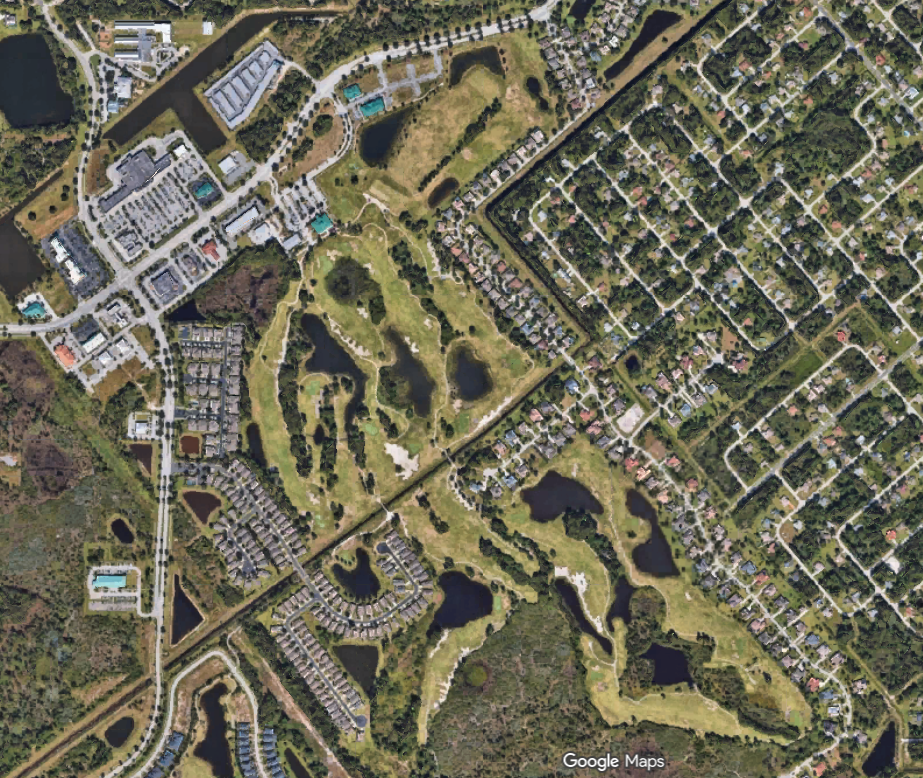
The city is not trying to buy the whole course. Of the roughly 189 acres that make up the former Majors, the proposal covers about 135 acres. The remaining acreage — roughly 54 acres — would stay with the current owner, Joy LLC, which purchased the property at auction in December 2019.
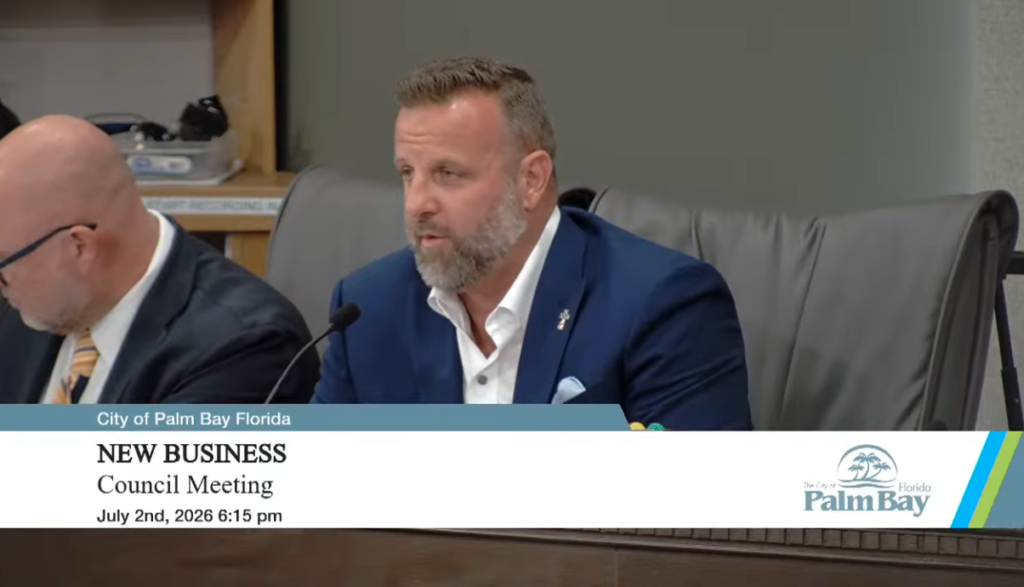
Deputy Mayor Mike Jaffe, who introduced the item, said buying the entire property “would be the best thing, but it’s simply not a financially feasible avenue that the city can take.” Any future development on the remainder would still have to go through the Planning and Zoning Board and City Council. Jaffe said the council’s current vision for that leftover parcel is primarily commercial, with the possibility of a small planned development of townhomes “but strictly no apartments whatsoever.” He cautioned that this remains speculative: there are no development plans, and the land is not under contract.

The city’s stated purposes for the 135 acres are strictly preservation and infrastructure:
- Deep well injection facilities to dispose of excess reclaimed water. When the golf course closed, the city lost its largest customer for reclaimed water, and Jaffe noted the city will have to buy land nearby for injection wells whether this deal happens or not.
- A regional stormwater park. The course has always functioned as the stormwater retention and treatment system for the surrounding community, cleansing runoff before it reaches the St. Johns River or the Indian River Lagoon.
- A future regional park, shaped by community input, the recreation advisory board, and staff studies — though Jaffe stressed there are no immediate plans to build one if the sale closes.
- Expanding the Palm Bay Land Trust conservation initiative the council approved earlier this year.
“The immediate purpose is to stop it from ever going into the hands of a large-scale developer,” Jaffe said, noting the acquisition would prevent the potential construction of more than 600 homes and an estimated 1,500 additional daily vehicle trips.
The motion, made by Councilman Kenny Johnson and amended after discussion, authorizes negotiation of a vacant land contract, the council deliberately skipped a non-binding letter of intent to signal seriousness. Terms discussed include a $100,000 earnest money deposit, a cash purchase, a 120-day due diligence period, and closing 45 days after due diligence ends, subject to title work, survey, environmental review, easement review, geotechnical work, and other investigations. Any final contract comes back to the council for approval, and the city is not waiving its eminent domain authority.
How the City Plans to Pay for It
No general fund tax dollars would be used. Jaffe said the largest portion would come from impact fees paid by developers, funds that, by law, must be spent within certain time windows and geographic zones or be forfeited.
“A portion of the park impact fees are approaching expiration due to poor planning by previous city management, which means we use it or lose it,” Jaffe said. “If we do not invest these dollars in an eligible park and recreation project in this zip code, those funds may ultimately have to be returned instead of being used to improve our community.”
The balance would come from utility enterprise funds and stormwater fees — money the city would have had to spend anyway to acquire land for the reclaimed water and drainage projects.
The Price Question
The gap between what the city wants to pay and what the seller wants remains the central obstacle. An independent appraisal commissioned by the city and received in May came in at $7.03 million. The owner has maintained a value position around $10.5 million, and Jaffe noted the parcel is currently marketed online for about $14 million. He also said the seller has fielded offers upwards of $30 million over the years from developers proposing roughly 700 homes.
Loveridge, the city’s broker, told the council that comparable closed golf course sales in the region, the nearest being Turtle Creek in Rockledge have averaged about $79,000 per acre, while the city’s contemplated range works out to the high $40,000s to low $50,000s per acre. He said a fair number sits “right in the middle, maybe a little bit lower than right in the middle” between the appraisal and the asking price.
Mayor Rob Medina pushed back on comparisons, pointing out the property is zoned for one house per five acres general use and pricing “should be deemed accordingly.” Councilman Mike Hammer argued the Majors is unlike any comparable sale because it functions as the watershed for roughly 4,700 residents, with conservation areas and Melbourne-Tillman Water Control District canals running through it that can’t be touched regardless of who owns it.
Jaffe openly lamented that Florida’s Sunshine Law forces the city to negotiate in public. “We have to speak publicly about what the terms look like, what the maximum purchase price that we feel comfortable with. So we’re at a disadvantage,” he said. In a bid to preserve some leverage, he asked his colleagues not to publicly stake out what they’d personally be willing to pay, and the council amended the motion to a range — $8.5 million to $10 million — rather than a single ceiling.
How We Got Here: A Course Bought, Closed, and Fought Over
The Majors was more than an amenity. The Arnold Palmer signature championship course was the centerpiece around which Bayside Lakes was built and marketed — the reason many of its nearly 3,000 homeowners bought there in the first place.
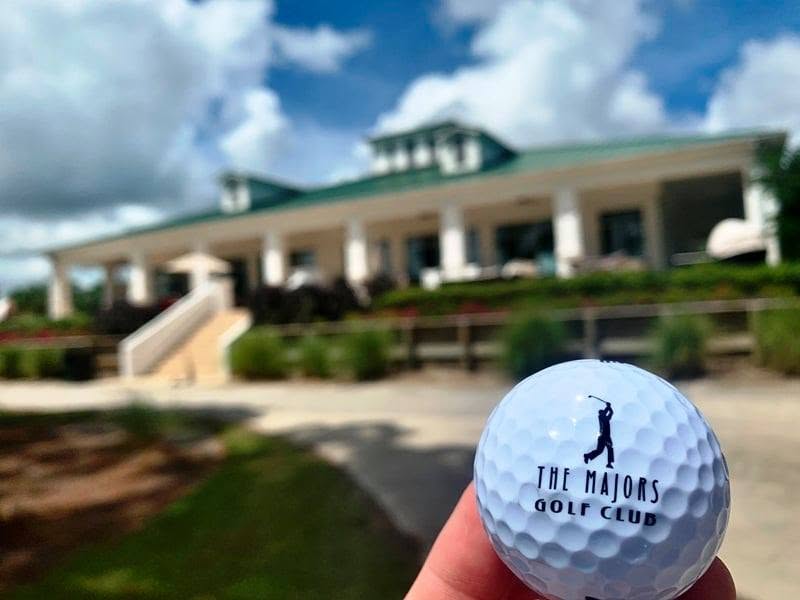
“The Major Golf Course was actually the treasure, the gem in the city of Palm Bay,” Medina said. “Everyone that purchased there came because of the golf course… an Arnold Palmer designed golf course. You’ll never see that again.”
The city’s first missed opportunity came in 2018, when a proposal championed by parks Directors Fred Poppe to acquire the still-operating course for a figure around $2 million failed on a 3-2 vote. Medina (prior to being elected Mayor), who watched from the audience that night, called Poppe’s effort “outstanding” and said the course “could have been maintained” as a public-private partnership. Instead, in December 2019, Joy LLC bought the property at auction for approximately $2.1 million.
What followed tracks a pattern that has played out at golf courses across Florida. Operations declined, the course permanently closed in June 2022, and the property was left to deteriorate with overgrown fairways, clogged canals, and enough dead brush that fire officials have warned of the hazard. In January 2023, the council passed a nuisance ordinance aimed directly at the abandoned course’s condition.
Meanwhile, Joy LLC pursued residential development. The proposal, branded Eden at Bayside Lakes, was first unveiled to hundreds of residents at a March 2024 citizen participation meeting as a 703-unit master-planned community — 403 single-family homes, 150 townhomes, and 150 apartments — later revised downward to around 460 units. The response was one of the largest sustained land-use fights in Palm Bay’s history: more than 3,000 petition signatures to keep the property zoned recreational, an organized coalition of Bayside Lakes HOAs, and the now-familiar sea of red shirts at every meeting where the property appeared on an agenda. An earlier rezoning attempt for the site was denied after public outcry.
The city’s own reviewers found serious problems with the Eden application. In September 2025 review comments, staff calculated the project’s qualifying open space at 14.88 percent which is far below both the 25 percent code requirement and the developer’s claimed 60.72 percent and flagged an unapproved traffic study, missing utility, school, and transportation concurrency reviews, shrinking lot sizes, and a commercial acreage shortfall. Those applications remain pending in staff review, with no hearing dates set.
The city explored buying the property as recently as 2023, when Mayor Medina pushed for negotiations, but the owner would not sell for less than the roughly $7 million appraised value at the time, and talks went nowhere. City Attorney Patricia Smith told the council Thursday that has changed: “I’ve actually talked to her attorney. They are open to making a deal now where there really hasn’t been an opening before. So this may be the best time.”
The State Is Taking Away the City’s Leverage
Jaffe framed the purchase as a race against Tallahassee as much as a real estate deal. He cited a string of state laws steadily stripping land-use authority from local governments: the Live Local Act (Senate Bill 102), Senate Bill 784 shifting final plat approvals from elected councils to an administrative process, and most recently Senate Bill 1434 legislation that, in Miami-Dade, Broward, and Palm Beach counties, creates pathways to accelerate redevelopment of environmentally impacted or inactive recreational properties, specifically targeting shuttered golf courses.
“It’s only a matter of time before that state infill development act affects our community,” Jaffe warned. Elsewhere in Florida, developers have already invoked the Live Local Act to bypass local zoning on closed golf courses, and in at least one case told a city council flatly that “your hands are tied.”
What Residents Said
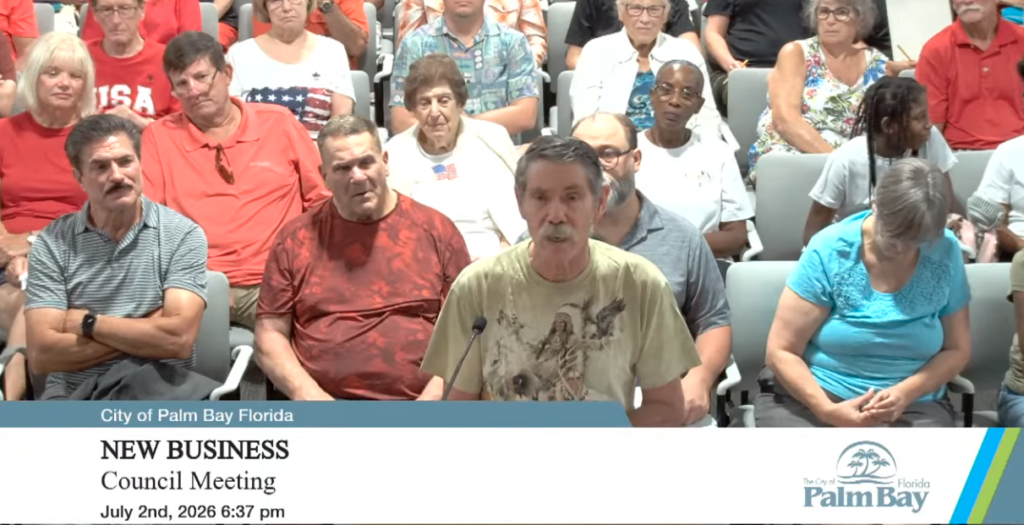
Public comment ran heavily in favor of the purchase. Lydia Barber, who lives less than two miles from the course, thanked the council but warned that if the deal falls through, the traffic study for the Eden development ignores both organic growth in the surrounding neighborhoods and the real-world traffic patterns at the property’s entrance. Doug Hook, a member of the city’s sustainability advisory board and a 15-year resident of Port Malabar Country Club, urged the council not to repeat what happened when his own neighborhood’s golf course was redeveloped: “There was a lack of planning… a lack of concern for water management. I do not think that anybody in the city of Palm Bay wants to see that happen a second time with the Majors.”
Robert Stise, the Summerfield HOA president who has helped lead the Bayside Lakes opposition coalition greeting the “red shirts” in attendance supported the purchase but pressed the council to lock in protections before its members leave office: “If we don’t have a contract that blocks apartments or storage units or car washes in there… we’re here again rallying. I don’t want to do that.” Ann Davis, a 40-year Palm Bay resident, asked the city to commit to design standards and long-term maintenance so the property looks like “a natural preserve” rather than industrial infrastructure.
Not everyone was on board. Bill Batten, known as the city’s watch dog who has only missed a handful of meetings in the last several decades, argued the city was bailing out a failed business, noting the owner bought a non-functioning golf course for $2.1 million in 2019 and now stands to collect around $10 million with the same zoning in place. “Keep the zoning general use and not spend our money to bail out a failed business,” he said. He also called the council hypocritical for selling city-owned land to fund road maintenance while spending millions on someone else’s. Another speaker, Richard Graves, resurfaced years-old allegations of pandemic-loan fraud connected to the golf course’s ownership; the city attorney responded that the federal loan program is outside the city’s jurisdiction, and Graves acknowledged he never reported the claims to the Department of Justice.
The Eminent Domain Card
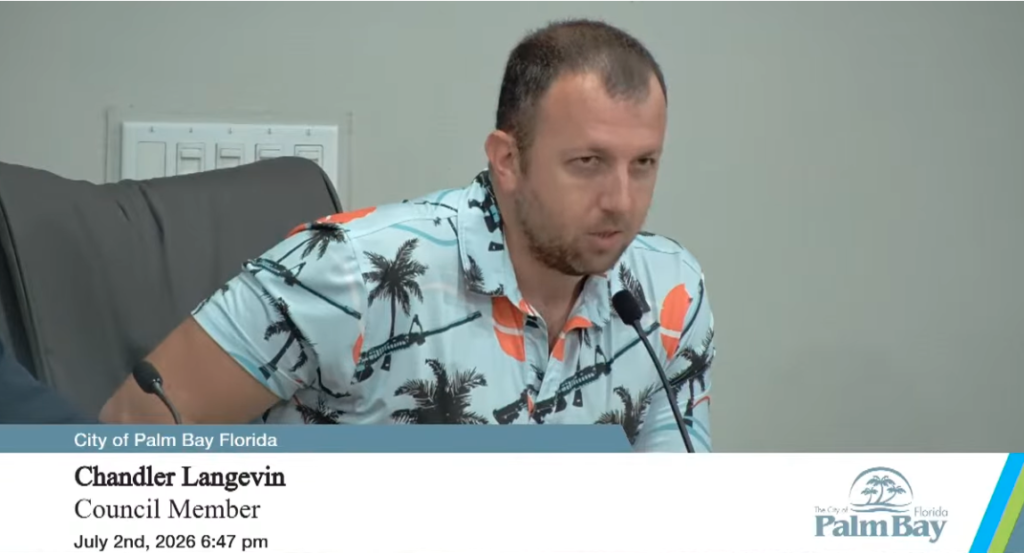
If negotiations fail, several council members made clear the conversation doesn’t end. Councilman Chandler Langevin said he would never vote to build anything on former golf course land and would be “willing to entertain the eminent domain word” if the city can’t get a fair deal.
Smith, the city attorney, confirmed eminent domain is legally viable for a park and stormwater use, but cautioned it would be slow and expensive — the city would owe appraisal costs, its own and the seller’s attorney’s fees, surveyor and discovery costs, and would likely “spend far more in the eminent domain process” than in a negotiated purchase. A “slow take” would at least let the city walk away if a court-determined price came in too high.
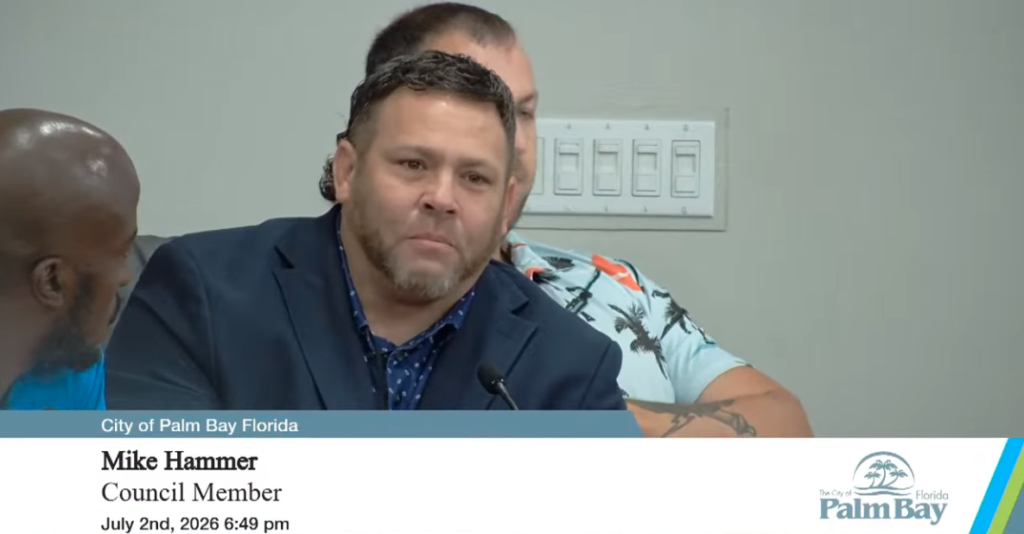
Hammer, invoking his family’s experience losing century-old cattle pens to an eminent domain road project, said the situation is graver than any comparable golf course fight: “We’re not having this conversation on should we do this… We’re having this conversation because it’s already affecting people.” He added that if the city succeeds, the land should never go private again, and floated bringing the Space Coast Transportation Planning Organization into the conversation, since the course’s cart paths are already designated as pedestrian walkways in the county’s TPO plan — a designation that could unlock additional funding.
What Happens Next
The vote directs staff and the broker to negotiate directly with the seller within the council’s parameters. Here’s the road ahead:
- Negotiation. Loveridge and city staff will work toward a vacant land contract within the $8.5–$10 million range. High-level conversations with the seller’s side have already occurred, and the seller’s attorney has signaled openness to a deal.
- Council approval. Any negotiated contract is contingent on a public vote of the City Council. Nothing is binding until it comes back to the dais.
- Due diligence. The contemplated terms include roughly 120 days of due diligence — including environmental testing of a property that spent decades absorbing golf course chemicals — followed by closing about 45 days later. If contamination or title problems surface, the city can walk.
- If talks collapse: the council has left eminent domain explicitly on the table, and at least one member has said he’s ready to use it.
- The remaining ~54 acres. Whatever Joy LLC proposes for the acreage it keeps must still clear the Planning and Zoning Board and City Council. The council’s stated appetite is commercial development, possibly townhomes — and no apartments.
- The Eden application. Joy LLC’s pending comprehensive plan amendment and preliminary development plan for the residential project remain in staff review with unresolved deficiencies and no hearing dates scheduled. A successful city purchase of the 135 acres would effectively end the Eden at Bayside Lakes project as proposed.
Jaffe closed his pitch with a nod to the Jordan Davis country song “Buy Dirt”: “You can’t buy happiness, but you can buy dirt. I’m asking tonight if the residents and council can see a vision and move forward.”
Eight years after the city passed on the Majors for $2 million, all five council members just voted to try again — at five times the price. Whether the seller says yes is now the only question left.
Criminal Defense
Bankruptcy · Evictions
WICKS LAW P.A.
Call or text for
free consult
321-733-2700
Eric Wicks, Esq.
1250 West Eau Gallie Blvd. G
Melbourne, FL 32935
Abogado Wicks habla español