
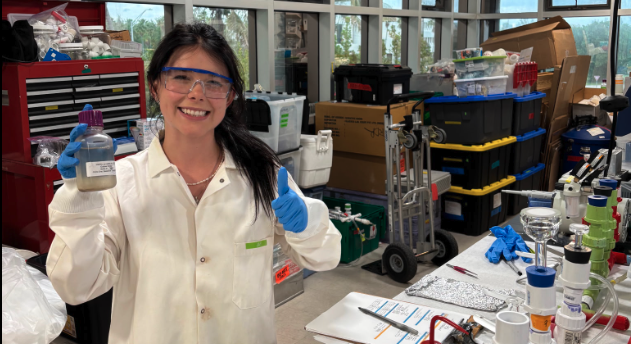
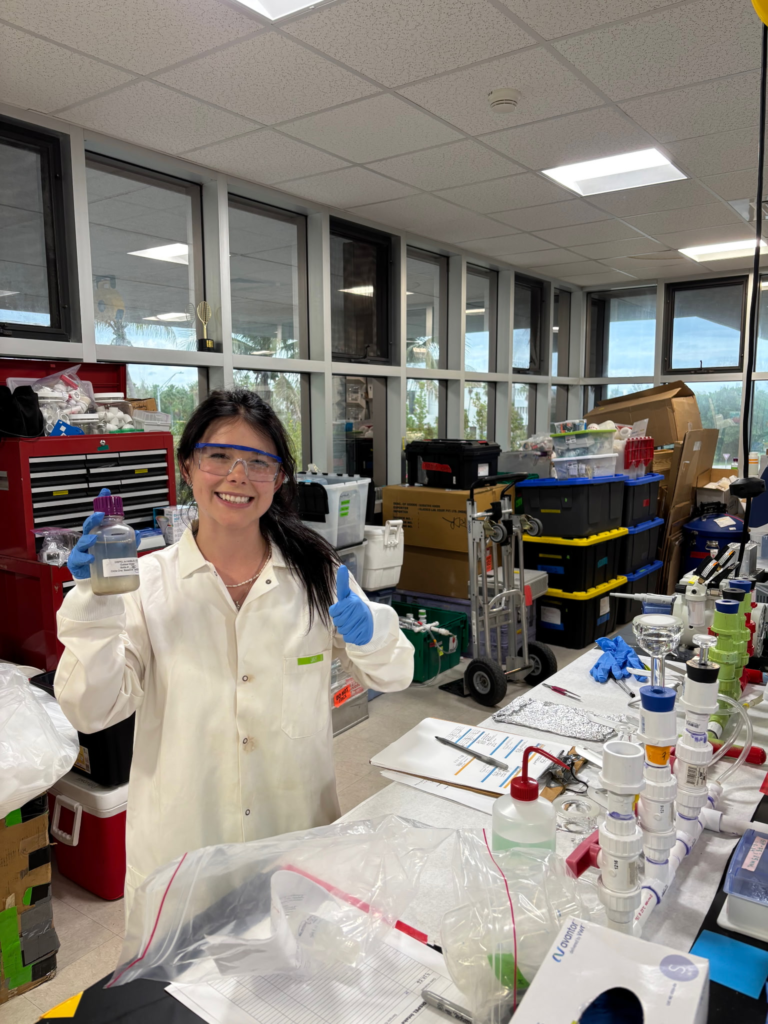
A Satellite High School graduate is now getting paid to study the same harmful algal blooms she watched choke the Indian River Lagoon as a kid on the Space Coast.

Jayda Holman, a sophomore at the University of Miami, was recently hired into a paid undergraduate research position in a lab focused on harmful algal blooms, according to a post from Satellite High School spotlighting her as part of its alumni and teacher recognition series. Holman is studying Marine Science and Geological Sciences, and she has now told the University of Miami’s sustainability office that she is confident in pursuing a PhD and a career in research.
She is not vague about where the spark came from. In her published bio as an ECO Rep at the University of Miami’s Lakeside Village, Holman wrote that she grew up on Florida’s Space Coast watching the devastating effects of harmful algal blooms in her own hometown, and that one of the major drivers of those blooms is fertilizer-contaminated runoff from over-fertilized lawns and farms.
“Investigating this through my high school’s science research program spurred my passion for education on more sustainable living practices,” Holman wrote. “I’m especially interested in water pollution research and remediation.”
The Teacher Behind the Lab
The high school program Holman is referring to is run out of Satellite High’s biotechnology research lab by science teacher Mrs. Kingsley, whose work running a Biosafety Level II student research laboratory has been quietly turning Brevard teenagers into competitive scientists for years.

According to letters Kingsley has posted publicly thanking donors who fund her lab, the program supports student researchers who go on to compete at regional, state, and international science and engineering fairs. She has noted that several of her students have placed in the top three at the Brevard Intracoastal Regional Science and Engineering Fair, and that students in the program have earned college credit for their research work.
The Satellite High School Facebook page made the connection explicit, writing that Holman “credits her success to the foundation built through Satellite’s science research program and the unwavering support of Mrs. Kingsley, whose mentorship and encouragement helped shape her path.”
The post closed with a line that should resonate with anyone who has watched Brevard’s teaching workforce stretched thinner every year: “This is the power of great teaching and meaningful relationships.”
Why a Brevard Kid Studying Algae Blooms Matters
Holman’s research interest is not abstract for anyone who lives on the Space Coast.
Harmful algal blooms have been one of the defining environmental crises of Brevard County for the past decade. The Indian River Lagoon has suffered repeated brown tide and algae events fueled by excess nitrogen and phosphorus loading, and the consequences have been staggering. According to Save the Manatee Club, between December 2020 and December 2022 more than 2,000 manatees died in Florida, and 744 of those deaths occurred in Brevard County, the epicenter of what the federal government formally classified as an Unusual Mortality Event. Manatees were starving because the seagrass they rely on had been wiped out by repeated algae blooms blocking sunlight.
The drivers Holman pointed to in her own bio, fertilizer runoff, leaking septic, and stormwater carrying lawn chemicals into the lagoon, are the same drivers identified by the St. Johns River Water Management District and Brevard County’s own Watershed Program. An estimated 75 billion gallons of stormwater runoff enters the Indian River Lagoon from Brevard County every year, carrying fertilizers, animal waste, oil, and pesticides into a waterway that supports more than 4,400 species of plants and animals.
Brevard County passed one of the more stringent residential fertilizer ordinances in the state in response, including a summer rainy-season fertilizer blackout from June 1 through September 30. Whether those ordinances are working remains an open scientific question that researchers like the team Holman is now joining are still trying to answer.
From Satellite High to a UM Research Lab
Holman is now an undergraduate at the University of Miami’s Rosenstiel School of Marine, Atmospheric, and Earth Science, which sits in the middle of one of the country’s most active hubs for harmful algal bloom research. The University of Miami has previously been awarded state funding through the Florida Department of Health to study the long-term human-health impacts of harmful blue-green algal blooms, with researchers from the Miller School of Medicine collaborating with Rosenstiel on prevention, screening, and health-disparity questions.
In other words, Holman is now working in the same field, at the same university, where some of the most consequential research on the public-health side of Florida’s algae problem is being done.
She is also, on the side, an ECO Rep for her residence hall, helping run sustainability programming for fellow students and pushing the kind of behavior changes she says she wishes had been more common in the suburban neighborhoods she grew up in.
A Quieter Story Worth Telling
In a year when Brevard’s school district has been dominated by political fights, teacher shortages, and headline-grabbing controversies, the Holman story is the kind that does not usually get told. A public-school teacher, working out of a high-school lab funded in part by small donations from strangers on the internet, mentored a local kid through a research project on a hometown environmental crisis. That kid is now a paid researcher at a top Florida university, on a track toward a PhD, in the exact field Brevard County most needs scientists working on.
That is what a working public-school science program is supposed to produce, and Satellite High School and Mrs. Kingsley produced one.
Criminal Defense
Bankruptcy · Evictions
WICKS LAW P.A.
Call or text for
free consult
321-733-2700
Eric Wicks, Esq.
1250 West Eau Gallie Blvd. G
Melbourne, FL 32935
Abogado Wicks habla español