

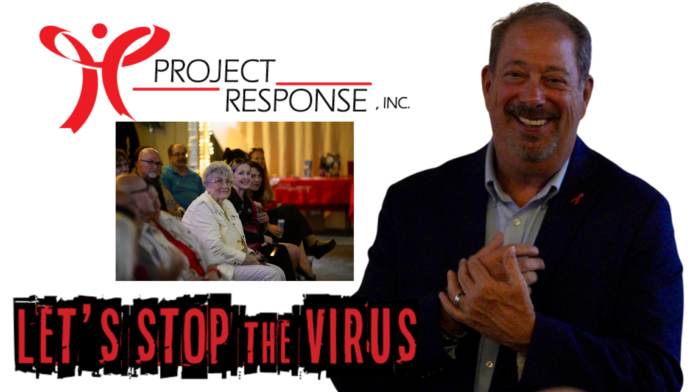
COCOA, Fla. — In 1990, when a small group of friends in Brevard County started taking care of each other in a private dining room because the local health department would not enter the home of a person with AIDS, no one in that room could have imagined what their informal network would become 35 years later.

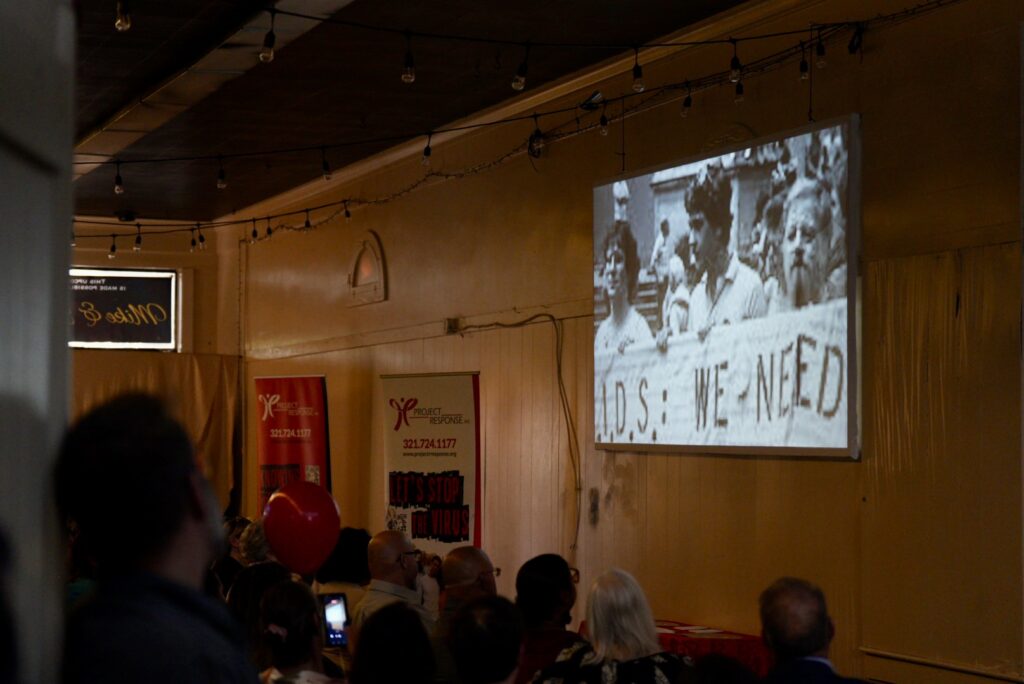
That story, and the urgent fight to keep it going, is the subject of a new mission video that premiered last night at the Cocoa Village Playhouse, profiling Project Response, Inc., the Melbourne-based HIV wellness center that has grown from a grassroots dining-room operation into one of the most comprehensive HIV care organizations in the State of Florida.
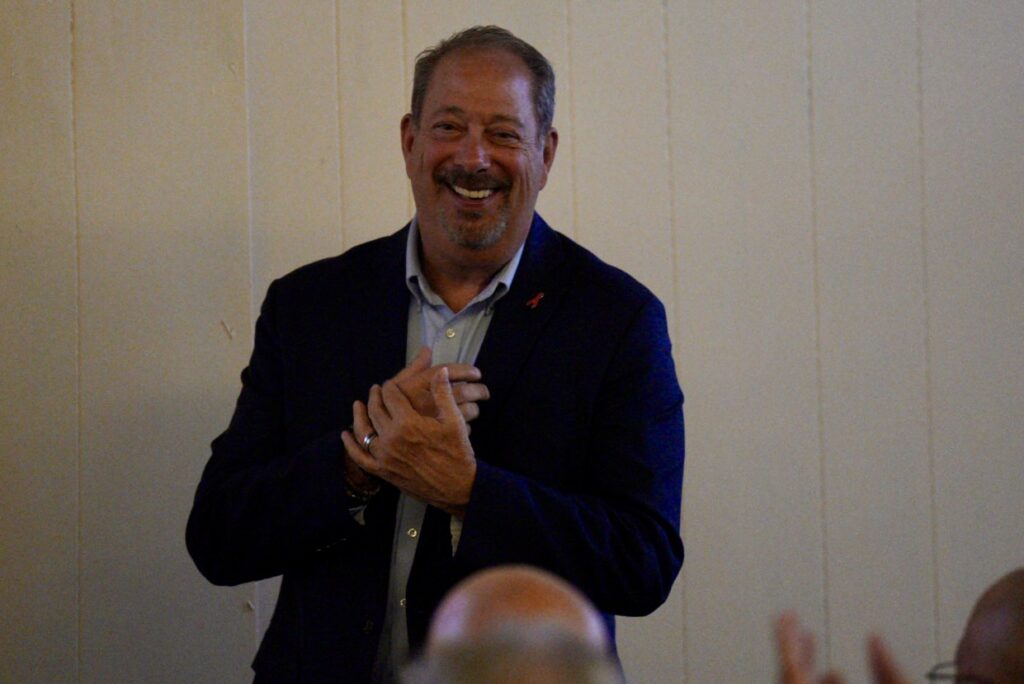
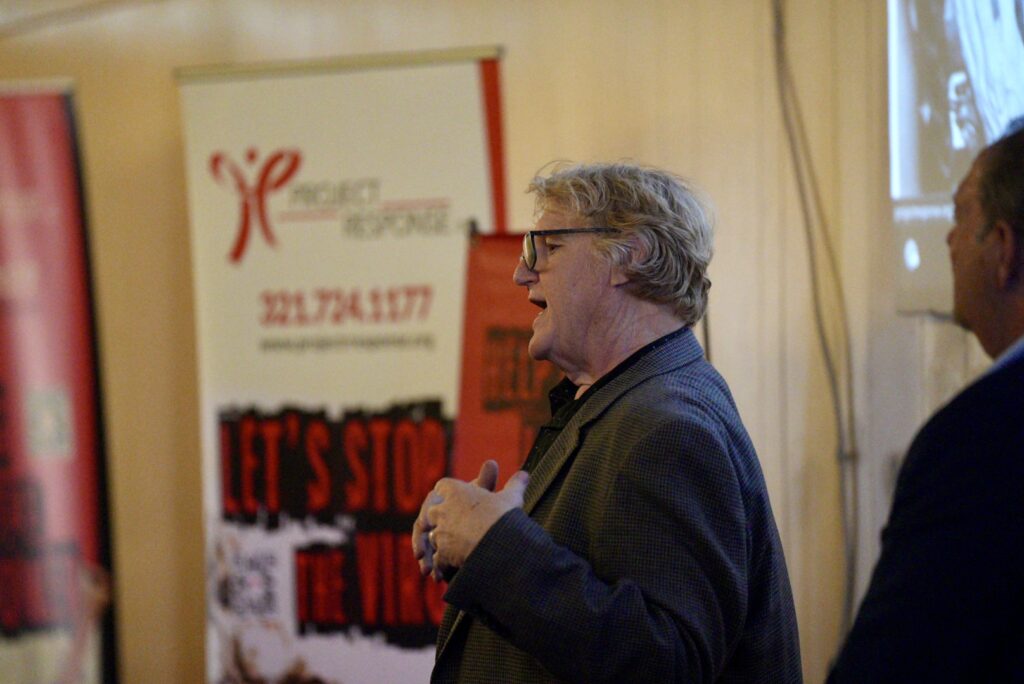
The film was produced by Cowbell Agency, the Indian Harbour Beach-based digital marketing firm, as a LEAD Brevard Community Acceleration Project, and was narrated by Adam Latham, Cowbell’s Managing Partner and Creative Director. The premiere was free and open to the public, hosted by LEAD Brevard as part of the leadership development organization’s program of pairing nonprofit agencies with teams of mid-career professionals to deliver high-impact community projects.
The video traces Project Response from its founding during the height of the AIDS crisis through its current operations at 378 N. Babcock Street in Melbourne, where the organization runs a full medical clinic, an in-house pharmacy, a mobile testing unit, a peer navigation team, and a food bank that distributes more than 31,000 meals a year. It also confronts head-on the funding crisis that organizational leadership says could threaten the entire model.
From a Dining Room to a Wellness Center
The film opens with Erik Hendrickson Cruz, the executive director recounting how the agency was founded out of the dining room of one of a circle of friends in Brevard County who started caring for the dying when the rest of the system would not. There were no services. There were no protocols. The local health department, the executive director said in the film, would not even enter the home of a person with AIDS because they did not have a standard operating procedure for it.

“Truly a group of my friends got together and we started taking care of our friends that were sick,” the executive director said. “It was about being present. It was about holding a hand. It was about helping someone get in and out of bed. It was about making sure they weren’t alone.”
That model, born of necessity, became the foundation of an organization that today manages between 520 and 550 clients through the federally funded Ryan White HIV/AIDS Program, which provides comprehensive case management, housing assistance, transportation to medical appointments, food access, dental care, medication, and copay support to people living with HIV who meet income eligibility requirements. All of it is provided at no cost to the client.
Comprehensive Care Under One Roof
The video walks viewers through what makes Project Response unusual, even in a state with a significant HIV burden. The organization operates a full medical clinic staffed by two infectious disease physicians and two advanced practice registered nurses providing primary care, with roughly 38 patient appointments handled in a typical clinic day.
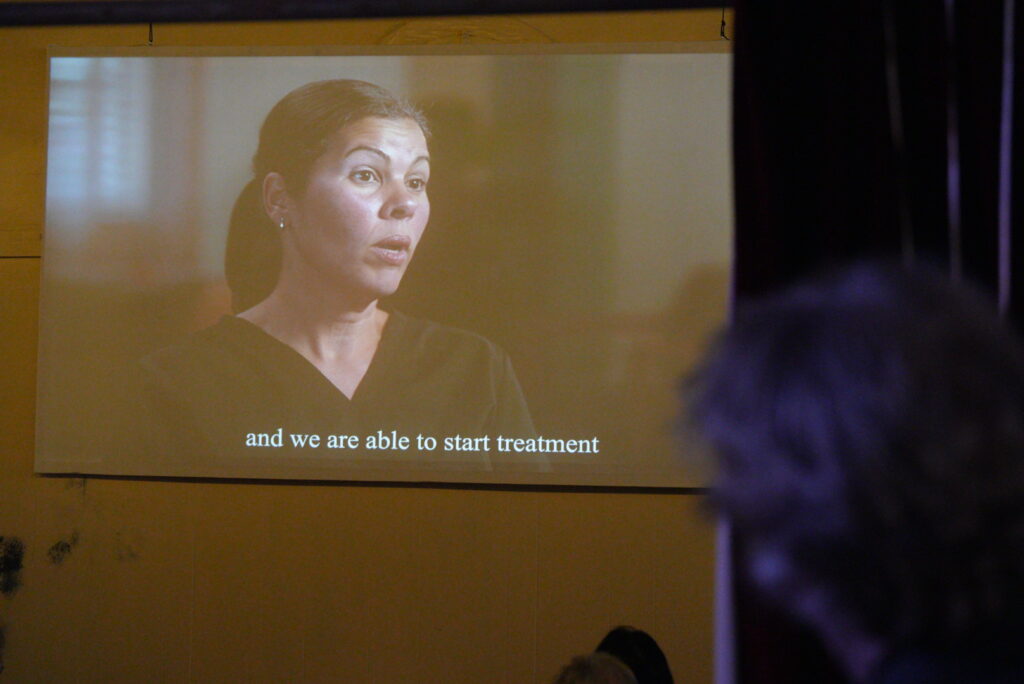
The film highlights the clinic’s “test and treat” approach, in which a patient who tests positive for HIV can have laboratory work completed on site and begin treatment the same day, an evidence-based protocol that improves outcomes and reduces transmission. For a newly diagnosed patient, Project Response activates what staff call the “red carpet protocol,” in which all other clinic activity pauses and every available resource is directed to the new patient. They do not leave the building without at least two weeks of medication, follow-up appointments, and a peer navigator who calls them daily.
“We want to make sure that person is not alone to deal with this by themselves,” the medical director said in the film.
The clinic also provides pre-exposure prophylaxis, or PrEP, a daily medication described in the film as up to 99 percent effective at preventing HIV infection in sexually active people, and post-exposure prophylaxis, or PEP, which can prevent infection if started within 72 hours of exposure. For people already living with HIV, the goal is viral suppression to undetectable levels, the point at which the virus cannot be transmitted to another person.
Empire Pharmacy and the 340B Lifeline
One of the most consequential threads in the film is the explanation of how Project Response actually pays for the work it does. Roughly 80 percent of the organization’s operating revenue comes through Empire Pharmacy, the in-house pharmacy housed within the wellness center, which participates in the federal 340B Drug Pricing Program.
Under 340B, qualifying clinics can purchase covered medications from manufacturers at deeply discounted prices and then bill insurance companies at the full negotiated rate. The difference, called 340B savings, is returned to the clinic to fund care for patients who cannot afford it. Without 340B, the executive director said in the film, there would be no Project Response.

That funding stream is now under simultaneous pressure from multiple directions. Drug manufacturers, including Eli Lilly, have moved to remove certain products from 340B participation. Insurance companies are increasingly building their own captive pharmacies and requiring patients to fill prescriptions only at those locations, cutting community pharmacies like Empire out of the revenue stream. And federal regulators at the Health Resources and Services Administration are considering a rebate model pilot program that hospital and provider groups warn could further erode 340B revenue across the country.
The ADAP Cliff and the Florida Premium Spike
The film also tackles a Florida-specific crisis that broke into public view earlier this year. On January 8, 2026, the Florida Department of Health announced sweeping changes to the state’s AIDS Drug Assistance Program (ADAP), effective March 1. The changes slashed income eligibility from 400 percent of the federal poverty level down to 130 percent, eliminated all insurance premium assistance, and removed Biktarvy, one of the most widely prescribed HIV antiretrovirals, from the state formulary.

The National Alliance of State and Territorial AIDS Directors estimated that more than 16,000 people would lose ADAP coverage as a result. In April, Florida lawmakers approved bridge funding to keep HIV medications covered through June 30, 2026, but advocates say that bridge does not solve the underlying problem.
The video lays out the math facing the organization. According to the executive director, marketplace insurance premiums in Florida rose 34 percent on average year-over-year, and the state notified Project Response that ADAP patients would lose coverage just five days before open enrollment ended, leaving the organization scrambling to find marketplace plans for clients. In one case described in the film, a patient earning $2,100 per month was quoted a $3,100 monthly premium for the cheapest available plan, even after applying premium tax credits.
“That is more than they make in a month,” the executive director said. “Our role in that is to pay that bill.”
The Mobile Clinic and Brevard’s Underserved Designation
Brevard County, despite being home to NASA’s Kennedy Space Center, the United States Space Force, SpaceX, Blue Origin, and Northrop Grumman, is officially designated by the federal government as a medically underserved area. The video features one provider recounting her surprise at the designation when she first arrived under a federal Centers for Disease Control and Prevention placement, driving past Space Coast wealth and infrastructure on her way to a community where access to HIV care remained limited.
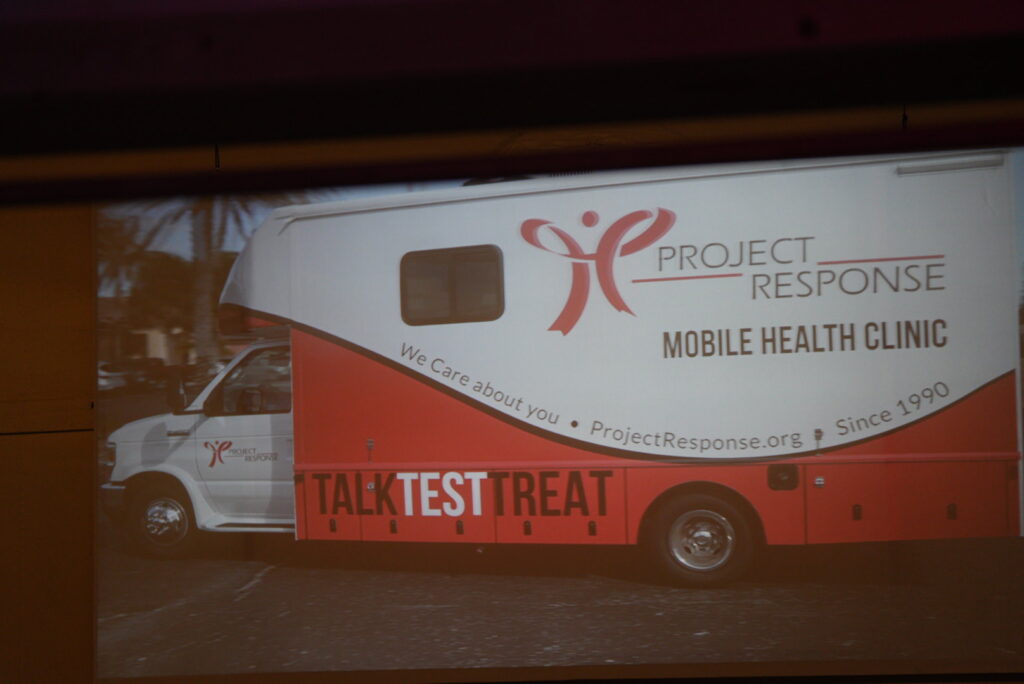
Project Response’s response to that gap was a fully customized mobile clinic that hit the road in January 2026, traveling to festivals, health fairs, libraries, parks, fire stations, and city parks where young people gather in the evenings. The unit has roughly doubled the organization’s annual testing volume, putting Project Response on track to perform around 3,000 tests this year, up from approximately 1,500.
Recognition and the Road Ahead
In recent years, Project Response has been named Nonprofit of the Year and received the Hero Award from the Space Coast Chamber of Commerce, recognition that the executive director said in the film represents the organization stepping out of the shadows after decades of operating quietly because of stigma and patient confidentiality concerns.
The film closes with leadership and clinical staff making the case that Project Response remains a lifeline. Last year alone, the organization served 647 people in Brevard County. Roughly 80 percent of its funding comes from a 340B revenue stream that is being squeezed from every direction. The remainder relies on community donations.
“I don’t think that people burn out because of hard work,” one staff member said in the film. “I think people burn out because they don’t feel like they’re helping.”
The mission video premiere was hosted by LEAD Brevard, the regional leadership development organization that since 1986 has paired its annual class of mid-career professionals with nonprofit agencies for hands-on Community Acceleration Projects. Cowbell Agency, founded in 2001, has earned more than 160 awards from the American Advertising Federation, the Florida Public Relations Association, and the Governor’s Conference on Tourism for its creative work.
To learn more about Project Response or to make a donation, visit projectresponse.org. Free and confidential rapid HIV testing is available at the clinic at 378 N. Babcock Street in Melbourne, or through the mobile unit, which posts its weekly schedule on the Project Response website.
Criminal Defense
Bankruptcy · Evictions
WICKS LAW P.A.
Call or text for
free consult
321-733-2700
Eric Wicks, Esq.
1250 West Eau Gallie Blvd. G
Melbourne, FL 32935
Abogado Wicks habla español