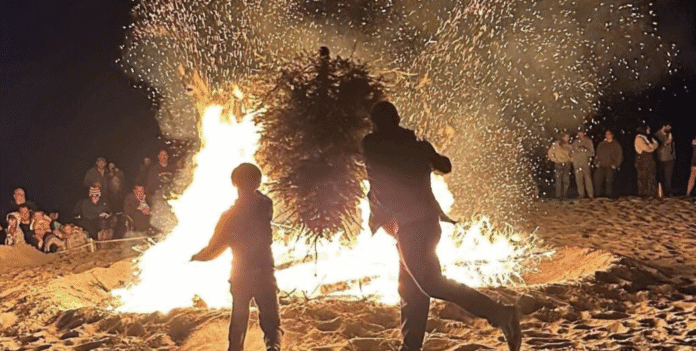
A large community bonfire involving hundreds of discarded Christmas trees is scheduled for Friday evening at the north end of Nance Park, prompting questions about potential environmental and public health impacts associated with burning treated trees on a public beach.
- Advertisement -
Organizers of the event have asked volunteers to assist in transporting more than 300 Christmas trees to the beach ahead of the bonfire, which is expected to begin around 6:15 p.m. The event has been promoted on social media as a long-standing local tradition. The trees are dropped off at a specific location and then transported directly to the event site.
While community bonfires using Christmas trees have historically been viewed as a festive way to dispose of trees after the holiday season, environmental experts note that modern agricultural practices have changed how those trees are grown and treated.
- Advertisement -
Screenshot
Chemical Treatments and Toxic Residue
Most commercially grown Christmas trees are treated during cultivation and transport with pesticides, fungicides, and preservatives designed to prevent insect infestations and mold growth. According to environmental research organizations, these substances can remain in the tree’s wood, bark, and needles long after harvest.
When burned, treated wood does not fully combust. Instead, combustion can release fine particulate matter, carbon monoxide, and volatile organic compounds into the air. Chemical residues may also remain concentrated in ash left behind after the fire.
- Advertisement -
Potential Human Health Risks
Public health experts warn that exposure to smoke from large open burns can pose respiratory risks, particularly when large quantities of treated wood are involved. Fine particulate matter can penetrate deep into the lungs and bloodstream, increasing the risk of breathing difficulties.
Children, older adults, and individuals with asthma, heart disease, or compromised immune systems may be especially vulnerable. Those standing downwind or in close proximity to the fire for extended periods face the highest exposure.
Ash produced from burning treated trees can settle on skin, clothing, and nearby sand. Because beach sand does not retain ash in place, residue can be spread by wind and foot traffic, increasing the potential for contact exposure, especially for children sitting or playing near the burn area.
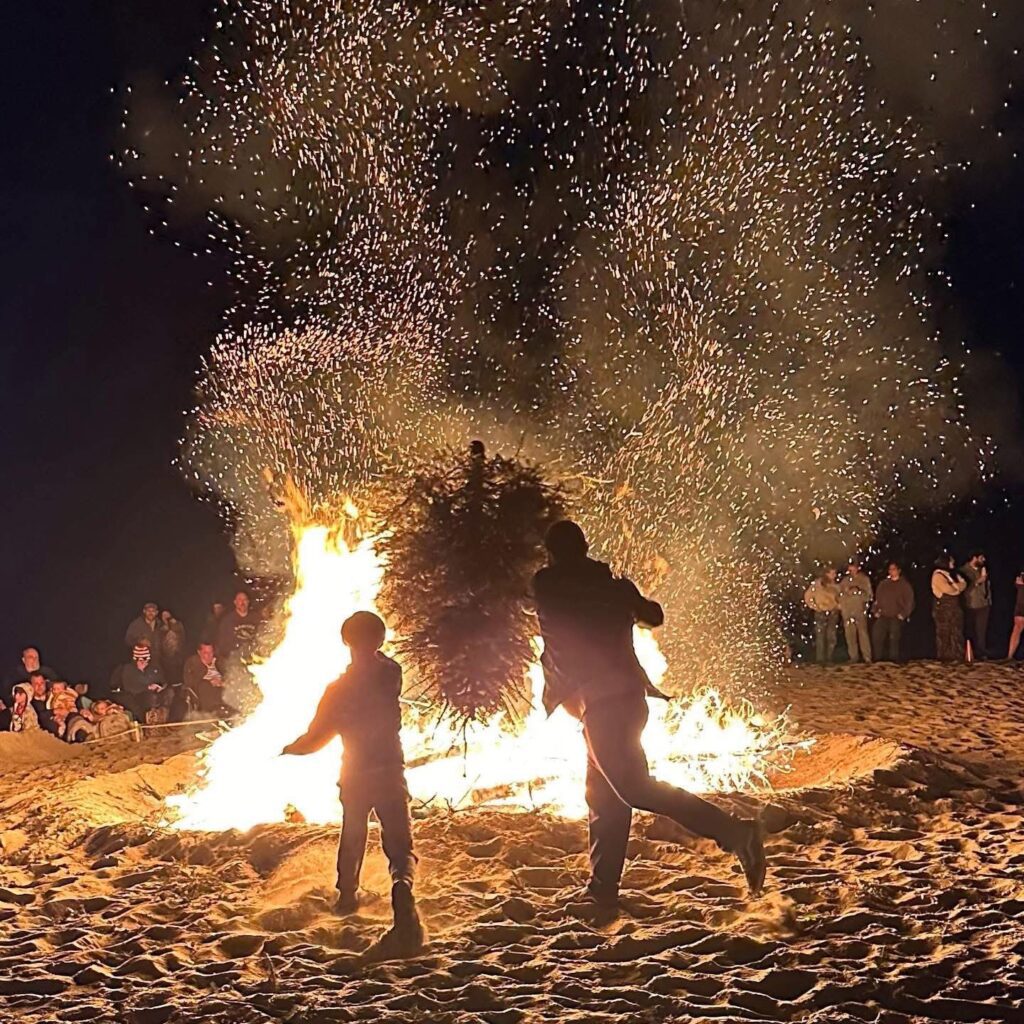
Christmas trees also burn rapidly and at high temperatures, sometimes producing sudden flare-ups and embers. Large centralized fires fueled by hundreds of trees can generate intense heat and flying debris, increasing the risk of burns and heat-related stress for nearby spectators.
Environmental Considerations in a Coastal Setting
Beaches are considered environmentally sensitive and highly permeable environments. Ash and residue from large bonfires can leach into sand, dune vegetation, or wash into nearshore waters during tides or rainfall.
Coastal wildlife, including birds, invertebrates, and marine organisms, may be affected by contaminated sand or runoff even after the fire has been extinguished. Environmental scientists emphasize that the scale of a burn matters, as the cumulative impact of hundreds of trees significantly increases the volume of smoke, ash, and potential contaminants released.
Scale and Crowd Proximity
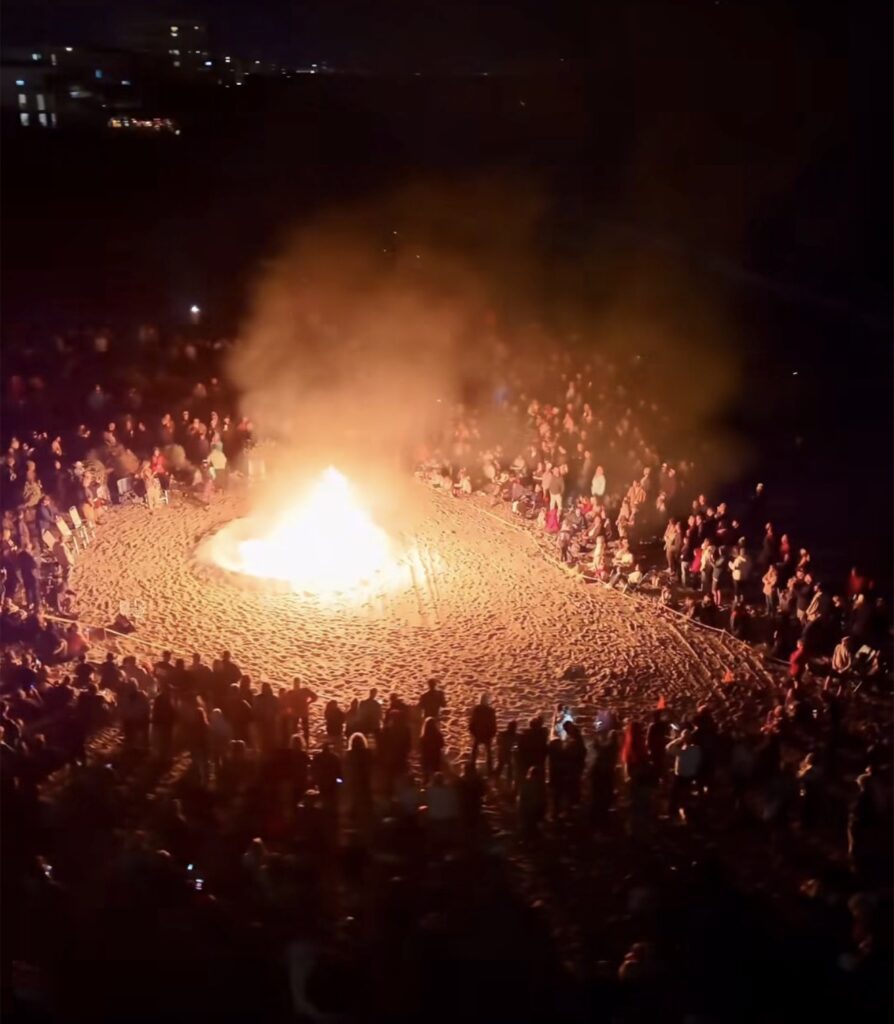
Photographs from previous years show dense crowds gathered in close proximity to a large centralized fire. Experts note that crowd size and distance from the burn area play an important role in determining exposure to heat, smoke, and airborne particles.
Large beach bonfires also present unique challenges due to shifting coastal winds, which can rapidly change the direction and concentration of smoke and embers.
County Regulations and Permitting
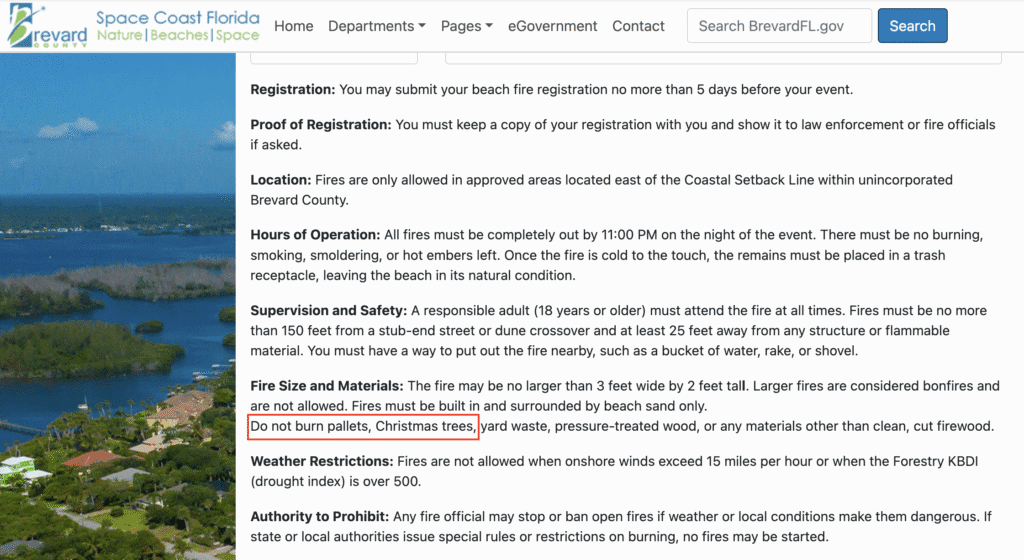
Brevard County Fire Rescue requires a Recreational Fire on the Beach application for permitted beach fires and maintains a list of prohibited materials that may not be burned. While Christmas trees have historically been used in community bonfires, county guidance does not specifically address chemical treatments commonly used in modern tree farming.
As of publication, it remains unclear whether environmental impact considerations related to pesticide-treated trees are reviewed as part of the permitting process for large-scale events or whether additional safeguards are required when significant volumes of material are burned.
County officials and event organizers were contacted for comment regarding environmental considerations, permitting, and cleanup practices. Responses were not received prior to publication.
A Tradition Meets Modern Science
Environmental advocates stress that raising these questions is not a call to cancel community traditions, but rather to ensure that public safety, environmental protection, and modern scientific understanding are reflected in permitting and oversight practices.
As the event approaches, residents are encouraged to remain informed, follow all safety guidance, and consider the potential impacts associated with large-scale beach fires involving treated materials.