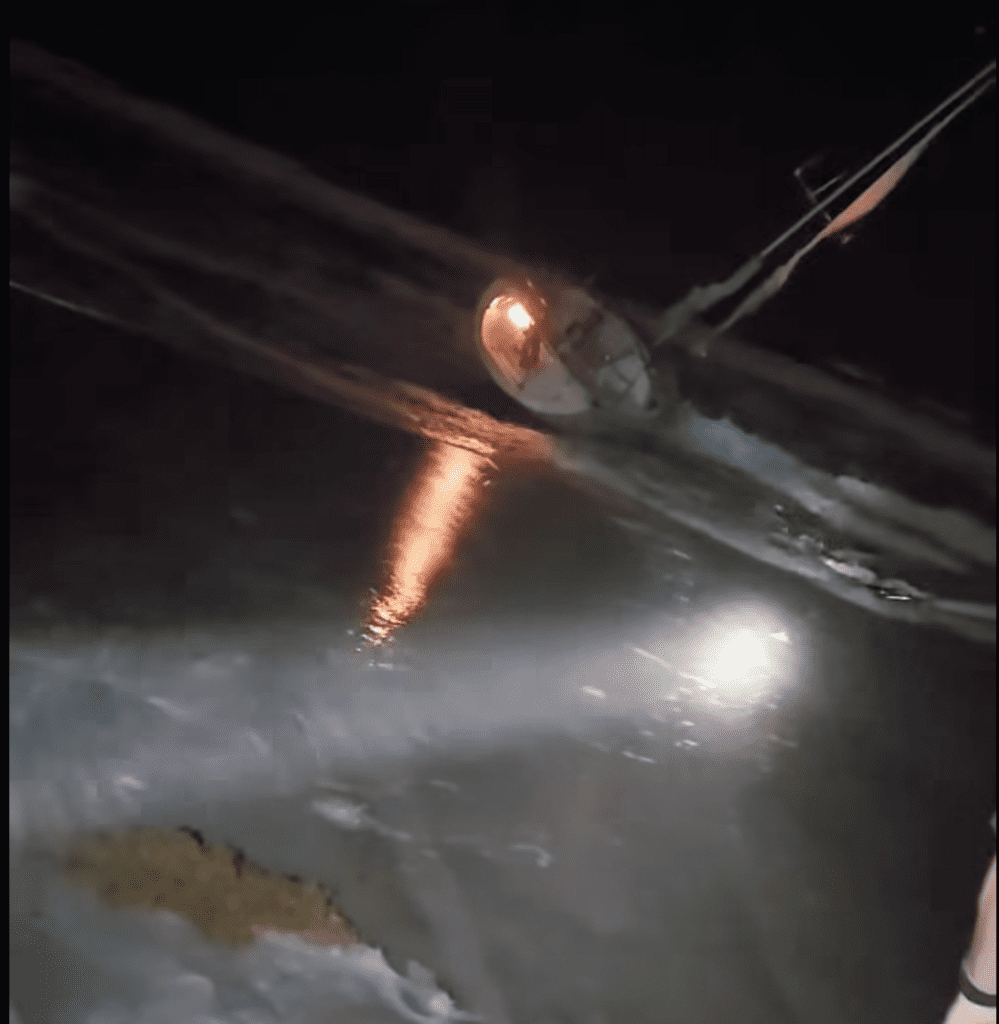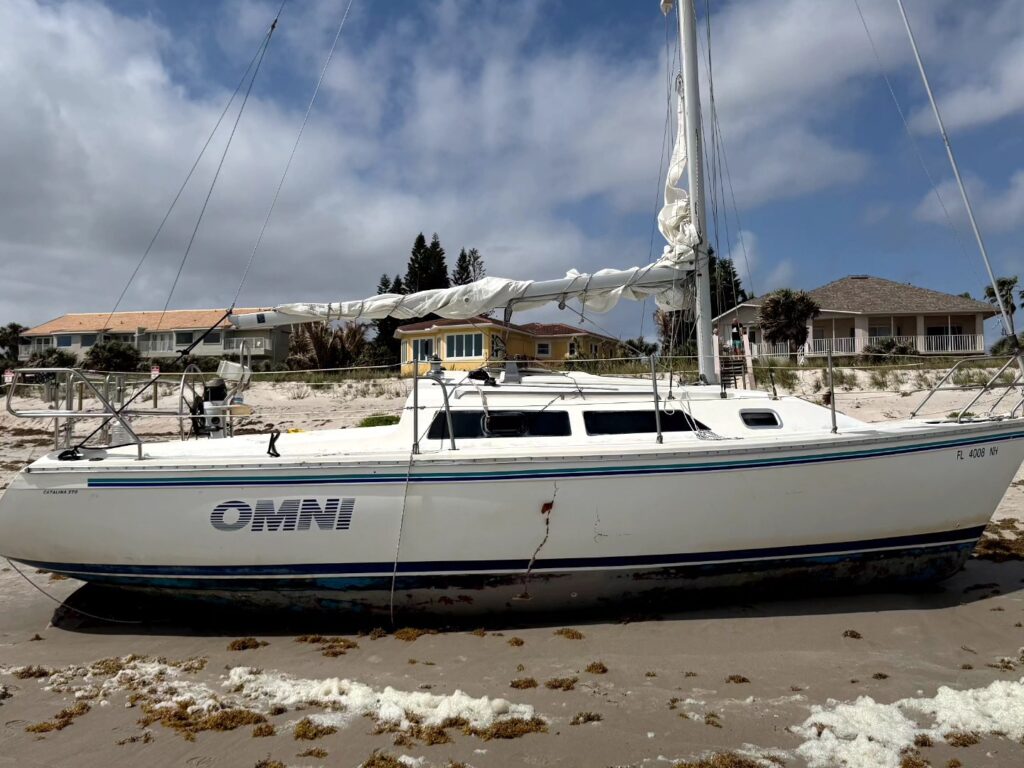

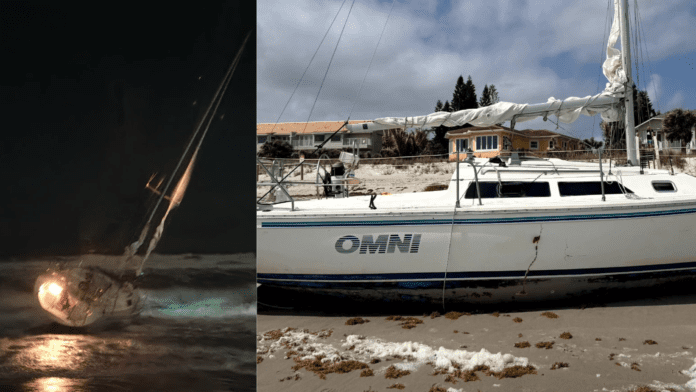
A sailboat identified as the Catalina II ended up beached in Satellite Beach late Saturday night after what appears to have been a tense distress situation off the Brevard County coast.

According to Satellite Beach Fire Department, the department responded to a sailboat that had beached on shore. The department said all occupants made it safely ashore, no injuries were reported, and the public was urged to keep a safe distance from the vessel because it could shift unexpectedly.
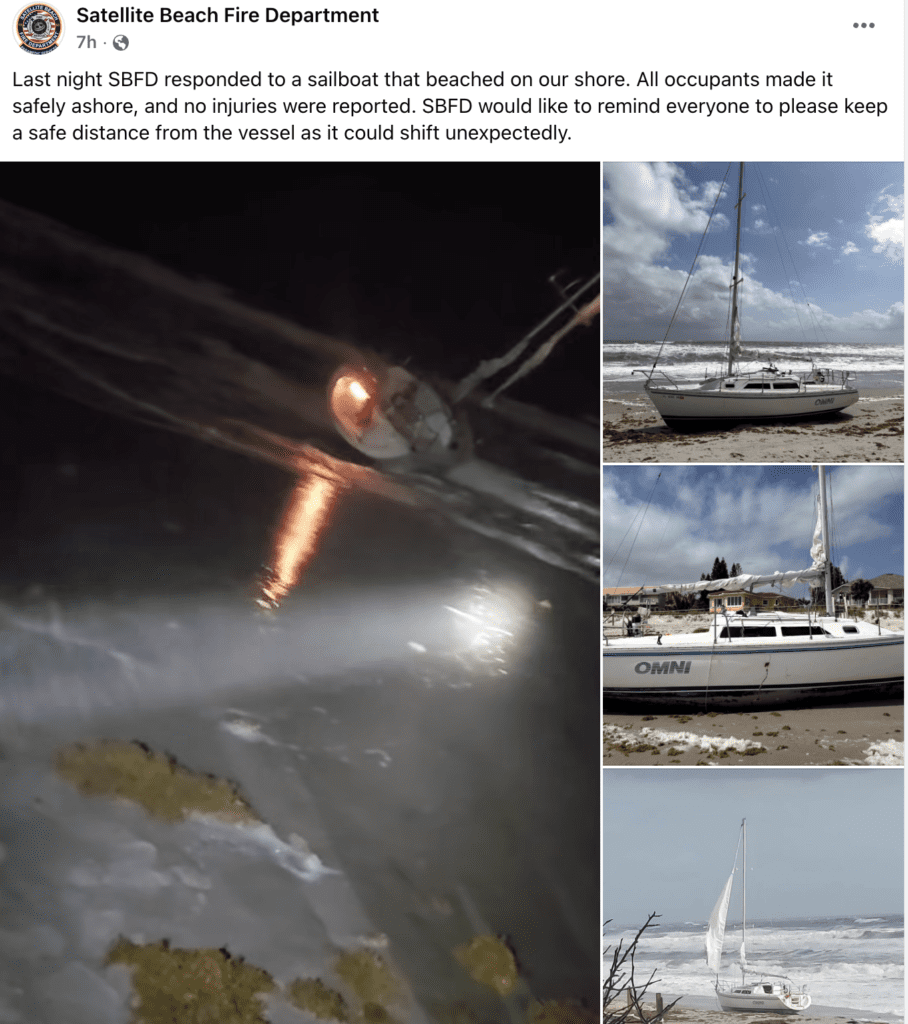
Radio traffic with the U.S. Coast Guard painted a far more urgent picture of what may have unfolded before the boat reached land. According to that audio, two exhausted adults aboard the vessel called for help south of Port Canaveral and at one point could be heard urgently saying they were looking for their son. The sailors stated they were too exhausted to return to Port Canaveral and discussed beaching the boat because of fatigue and conditions at sea.
For some time, they stopped responding to the Coast Guard until they were eventually beached in Satellite Beach not far from Paradise Beach. One of the sailors told the Coast Guard that he was actively looking for his son who he could not locate at that time.

The incident also serves as a reminder of how marine emergencies are supposed to be handled. The U.S. Coast Guard instructs mariners in distress to use VHF-FM Channel 16, issue a mayday call, identify the vessel, give their position, explain the emergency, and remain on the radio for follow-up communication when possible. The Coast Guard’s public guidance also says people needing emergency assistance should use VHF-FM Channel 16 or call 911.
The Coast Guard has also encouraged boaters to properly configure the Digital Selective Calling, or DSC, distress feature found on many marine radios. According to Coast Guard guidance, when a DSC radio is connected to GPS and programmed with an MMSI number, it can transmit a digital distress alert that includes the vessel’s identity and location to nearby vessels and coast stations within range.

For boaters heading out near Port Canaveral or anywhere along the Space Coast, both state and federal safety guidance stress the same basics: check the weather before leaving, keep an eye out for storms and rough seas, carry required safety gear, leave behind a float plan, and make sure there is an approved life jacket for each person on board. Florida Fish and Wildlife specifically warns that conditions on the water can change rapidly, and U.S. Coast Guard guidance says recreational vessels must have a wearable personal flotation device for every person aboard.
Port Canaveral also notes that it works with the U.S. Coast Guard and the National Weather Service on severe weather preparedness and emergency coordination. The port’s official navigation information describes a seven-nautical-mile channel, underscoring how heavily trafficked and carefully managed the waters are in and around the area where the distress was reportedly unfolding.
Thankfully, the incident ended without reported injuries, and with the vessel ashore in Satellite Beach.