


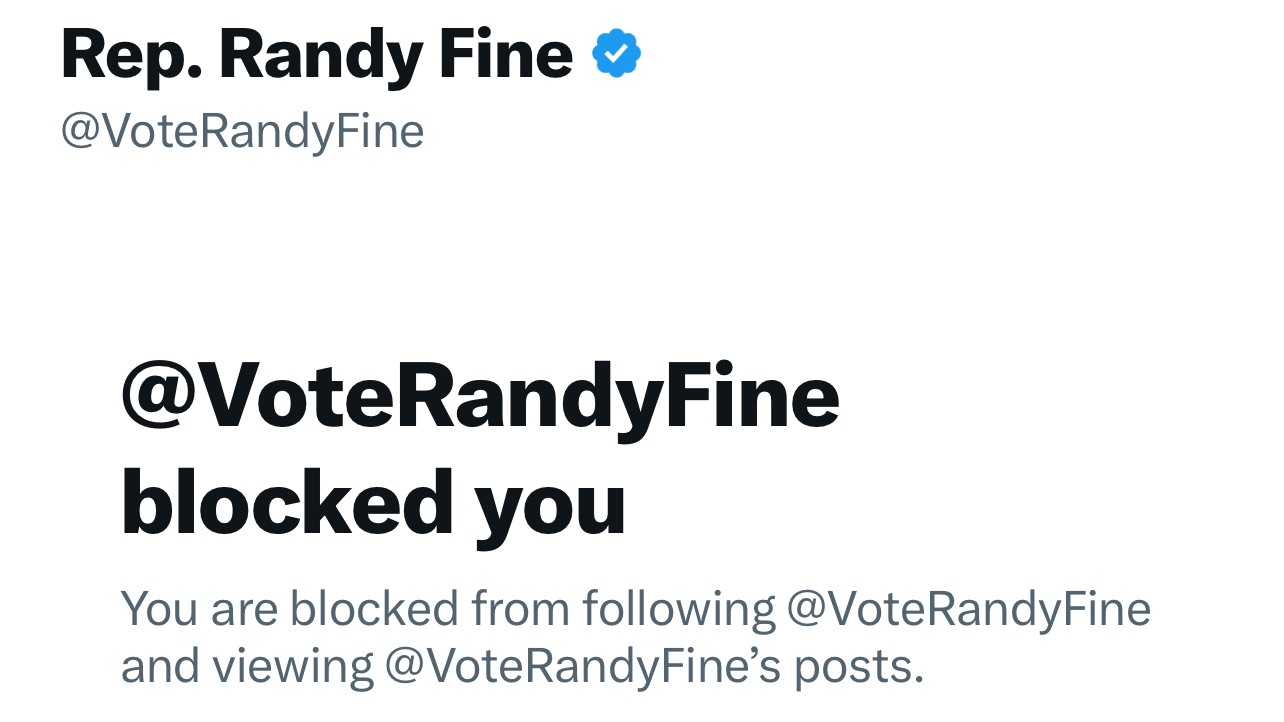
WASHINGTON (AP) — A unanimous Supreme Courtruled Friday that public officials can sometimes be sued for blocking their critics on social media, an issue that first arose for the high court in a case involving then-President Donald Trump.

Justice Amy Coney Barrett, writing for the court, said that officials who use personal accounts to make official statements may not be free to delete comments about those statements or block critics altogether.
On the other hand, Barrett wrote, “State officials have private lives and their own constitutional rights.”
The court ruled in two cases involving lawsuits filed by people who were blocked after leaving critical comments on social media accounts belonging to school board members in Southern California and a city manager in Port Huron, Michigan, northeast of Detroit. They are similar to a case involving Trump and his decision to block critics from his personal account on Twitter, now known as X. The justices dismissed the case after Trump left office in January 2021.
The cases forced the court to deal with the competing free speech rights of public officials and their constituents, all in a rapidly evolving virtual world. They are among five social media cases on the court’s docket this term.

Appeals courts in San Francisco and Cincinnati had reached conflicting decisions about when personal accounts become official, and the high court did not embrace either ruling, returning the cases to the appeals courts to apply the standard the justices laid out Friday.
“When a government official posts about job-related topics on social media, it can be difficult to tell whether the speech is official or private,” Barrett said.
Officials must have the authority to speak on behalf of their governments and intend to use it for their posts to be regarded essentially as the government’s, Barrett wrote. In such cases, they have to allow criticism, or risk being sued, she wrote.
In one case, James Freed, who was appointed the Port Huron city manager in 2014, used the Facebook page he first created while in college to communicate with the public, as well as recount the details of daily life.
In 2020, a resident, Kevin Lindke, used the page to comment several times from three Facebook profiles, including criticism of the city’s response to the COVID-19 pandemic. Freed blocked all three accounts and deleted Lindke’s comments. Lindke sued, but the 6th U.S. Circuit Court of Appeals sided with Freed, noting that his Facebook page talked about his roles as “father, husband, and city manager.”
The other case involved two elected members of a California school board, the Poway Unified School District Board of Trustees. The members, Michelle O’Connor-Ratcliff and T.J. Zane, used their personal Facebook and Twitter accounts to communicate with the public. Two parents, Christopher and Kimberly Garnier, left critical comments and replies to posts on the board members’ accounts and were blocked. The 9th U.S. Circuit Court of Appeals said the board members had violated the parents’ free speech rights by doing so. Zane no longer serves on the school board.
The court’s other social media cases have a more partisan flavor. The justices are evaluating Republican-passed laws in Florida and Texas that prohibit large social media companies from taking down posts because of the views they express. The tech companies said the laws violate their First Amendment rights. The laws reflect a view among Republicans that the platforms disproportionately censor conservative viewpoints.
Next week, the court is hearing a challenge from Missouri and Louisiana to the Biden administration’s efforts to combat controversial social media postson topics including COVID-19 and election security. The states argue that the Democratic administration has been unconstitutionally coercing the platforms into cracking down on conservative positions.
The cases decided Friday are O’Connor-Ratcliff v. Garnier, 22-324, and Lindke v. Freed, 22-611.
Reporting by the Associated Press
Criminal Defense
Bankruptcy · Evictions
WICKS LAW P.A.
Call or text for
free consult
321-733-2700
Eric Wicks, Esq.
1250 West Eau Gallie Blvd. G
Melbourne, FL 32935
Abogado Wicks habla español