

- Advertisement -

FWC announces funding opportunity aimed at conservation, education, and habitat protection across Florida
- Advertisement -


Published on
FWC announces funding opportunity aimed at conservation, education, and habitat protection across Florida
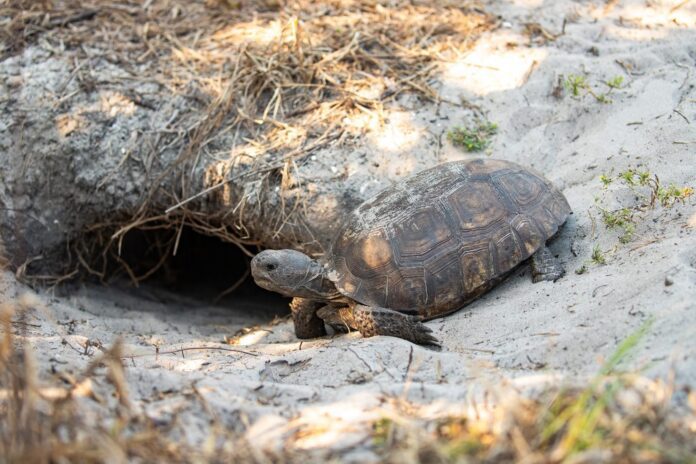
The Florida Fish and Wildlife Conservation Commission (FWC) is calling on researchers, educators, and conservation organizations to submit proposals aimed at protecting one of Florida’s most important native species, the gopher tortoise.
In a newly announced outreach and research initiative, FWC officials say they are seeking projects that expand public education, strengthen conservation practices, and fill critical knowledge gaps surrounding gopher tortoise populations throughout the state. The submission deadline for proposals is April 15.

The effort could have direct implications for Brevard County and the broader Space Coast region, where rapid development continues to intersect with sensitive wildlife habitats.
A Keystone Species in Florida Ecosystems

The gopher tortoise is classified as a threatened species in Florida and plays a critical role in maintaining healthy ecosystems. Often referred to as a “keystone species,” the tortoise digs extensive underground burrows that provide shelter for more than 350 other species, including rabbits, frogs, snakes, owls, and insects.
Because of this, conservation efforts aimed at protecting tortoises often benefit entire ecosystems.
FWC officials say this year’s funding cycle will prioritize projects that help expand conservation messaging and public awareness while also advancing scientific research.
Proposals may include:
• Public outreach and education programs
• Scientific research addressing conservation challenges
• Policy or management recommendations
• Projects involving commensal species that rely on tortoise burrows
Why This Matters on the Space Coast
Brevard County has experienced sustained residential and commercial growth over the past decade, particularly in areas near Palm Bay, Viera, and southern county developments where gopher tortoise habitats are common.
Construction projects frequently require tortoise relocation permits, and conservation debates often arise when development plans overlap with protected habitats.
Local environmental advocates have long argued that better public education and research are needed to balance growth with wildlife protection. FWC’s funding initiative could provide opportunities for local universities, conservation groups, and environmental educators to participate directly in shaping statewide conservation strategies.
Florida Tech and other regional institutions may also be positioned to contribute research proposals given their proximity to coastal ecosystems and ongoing environmental science programs.
Research That Shapes Policy
According to FWC, funded projects are intended not only to advance scientific understanding but also to influence future conservation policies and best practices statewide.
By addressing knowledge gaps, officials hope to improve long-term habitat management while reducing conflicts between development and wildlife preservation.
Projects that incorporate species benefiting from tortoise burrows are strongly encouraged, highlighting the broader ecological importance of protecting tortoise populations.
How to Apply
Organizations and researchers interested in submitting proposals can review full guidelines and application details through the FWC wildlife habitat program.
FWC officials emphasize that collaboration between scientists, educators, policymakers, and community organizations will be key to strengthening conservation outcomes across Florida.
As development pressures continue across the Space Coast, initiatives like this may play an increasingly important role in determining how Florida balances growth with preservation of its unique natural heritage.