


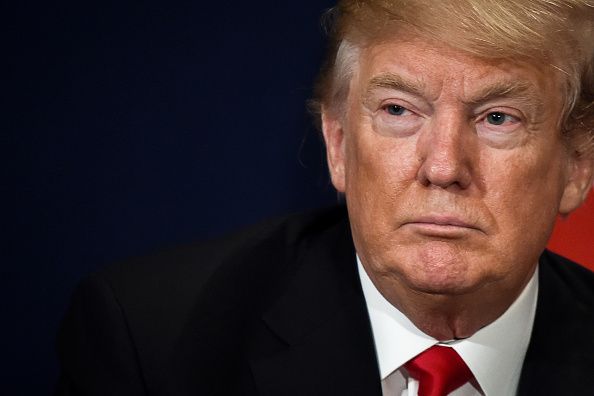
In a lengthy post on Truth Social Monday, Trump made the case for reauthorization, acknowledging his own history as a target of surveillance abuse while arguing the program is now vital to national security, particularly in light of ongoing U.S. military operations against Iran.

“Our Military desperately needs FISA 702,” Trump wrote, “and it is one of the reasons we have had such tremendous SUCCESS on the battlefield.”
What is FISA 702?
Section 702 of the Foreign Intelligence Surveillance Act allows the U.S. government to conduct surveillance of foreign nationals located overseas without obtaining an individual court order. The catch: it also sweeps up the communications of Americans who interact with those foreign targets. That “incidental collection” is what has fueled a decade-long civil liberties debate on both the left and the right.
Trump’s reversal is hard to ignore

Just two years ago, in April 2024, Trump took the exact opposite position. “KILL FISA,” he posted on Truth Social. “IT WAS ILLEGALLY USED AGAINST ME, AND MANY OTHERS.” That post was widely credited with helping tank a procedural vote in the House that day, as 19 House Republicans joined Democrats to block the bill from coming to the floor.
Now, Trump is calling on Republicans to “UNIFY” behind the same type of clean reauthorization he once urged them to kill.
He draws a distinction in his post, arguing that the 2016 abuse was carried out under FISA Title I, the domestic surveillance provision, and not Section 702, the foreign intelligence tool he now supports. That distinction is legally accurate, but critics note it does not address the broader problem: Section 702’s “backdoor search” loophole allows federal agents to search databases containing Americans’ communications without a warrant, and the FBI conducted 7,413 such searches of Americans in the 2024-2025 window, a 35 percent increase over the prior year.
The political math is messy
Speaker Mike Johnson faces a steep climb. He can afford to lose only two Republican votes on the rule vote to bring the bill to the floor. Rep. Anna Paulina Luna (R-FL) is threatening to vote no unless the SAVE Act, the GOP’s voter ID bill, is attached. Rep. Thomas Massie (R-KY) says he still plans to vote no without a warrant requirement. And 98 House Democrats in the Congressional Progressive Caucus have formally committed to oppose any reauthorization without significant reforms, a binding position the caucus has never taken before.
On the other side, House Judiciary Chair Jim Jordan, who spent years demanding FISA reforms, reversed course and said he will now support a clean extension at Trump’s request.
What reformers want
Civil liberties advocates on both sides of the aisle have pushed for three specific changes before any reauthorization: a warrant requirement before agents can search for Americans’ data in the 702 databases, a ban on the government purchasing Americans’ location and browsing data from commercial data brokers without a warrant, and a repeal of the 2024 expansion that allows the government to compel millions of Americans and private companies to assist with surveillance.
A bipartisan bill, the Government Surveillance Reform Act, introduced by Reps. Zoe Lofgren (D-CA) and Warren Davidson (R-OH) and Sens. Ron Wyden (D-OR) and Mike Lee (R-UT), would reauthorize Section 702 for four years while adding all three of those protections. Johnson and the White House have rejected it in favor of the clean extension.
The bottom line
The irony here is notable. The same president who was, by his own account and the documented record, a victim of FISA abuse is now asking Congress to renew the program without adding the warrant requirement that might have protected him in the first place. Whether that is a principled concession for national security reasons, as Trump frames it, or an example of a politician viewing surveillance differently from inside the White House than from the outside, is a question voters can weigh for themselves.
Section 702 expires April 20. The House vote is expected this week.
Criminal Defense
Bankruptcy · Evictions
WICKS LAW P.A.
Call or text for
free consult
321-733-2700
Eric Wicks, Esq.
1250 West Eau Gallie Blvd. G
Melbourne, FL 32935
Abogado Wicks habla español