- Advertisement -
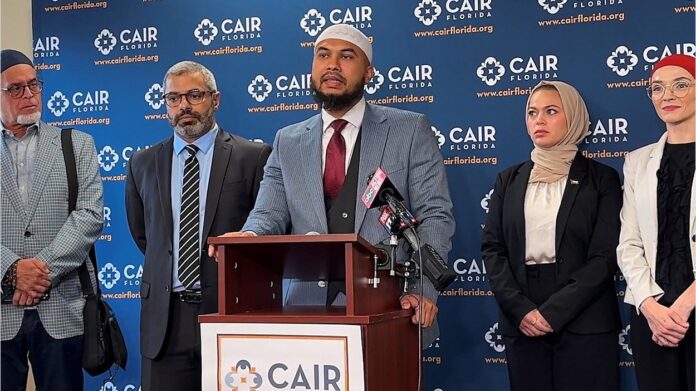
A federal judge has temporarily blocked a controversial executive order issued by Florida Governor Ron DeSantis that attempted to classify two Muslim organizations as foreign terrorist groups and restrict their access to state resources.
- Advertisement -
The ruling, issued Wednesday by U.S. District Judge Mark E. Walker, places a preliminary injunction on the order while a lawsuit challenging the measure continues in federal court.
Judge Says Order Raises Constitutional Concerns
- Advertisement - In his written decision, Walker concluded that the executive order likely violates First Amendment protections and improperly uses the authority of the governor’s office to make what he described as a political statement affecting constitutional rights.
The judge said the central issue before the court is whether a state governor can unilaterally designate a major American civil rights organization as a “terrorist organization” and impose penalties on individuals or groups that support it.
- Advertisement -
The injunction means the order cannot be enforced while the legal challenge proceeds.
Organizations Targeted by the Order
DeSantis’ order specifically targeted two groups:
Council on American-Islamic Relations (CAIR) Muslim Brotherhood
The directive instructed Florida agencies to deny contracts, employment opportunities, and other state benefits to the organizations or individuals accused of providing them material support.
CAIR, which has more than 20 chapters across the United States and focuses on civil rights advocacy and legal action, filed the lawsuit against the governor in December shortly after the order was issued.
The organization argues the order is unconstitutional and that the authority to formally designate terrorist organizations belongs exclusively to the federal government.
Federal Authority Over Terrorist Designations
The lawsuit also argues that DeSantis overstepped state authority by attempting to create his own designation system for terrorist groups.
Under federal law, the power to identify and designate foreign terrorist organizations rests with the U.S. State Department and federal authorities, not individual states.
The court’s preliminary ruling suggests the judge believes the plaintiffs are likely to succeed on those arguments, at least enough to justify blocking the order while the case continues.
Broader Context of the Dispute
Civil rights groups supporting the lawsuit argue the executive order unfairly targets Muslim organizations and could discourage protected speech or advocacy related to Middle East politics or Palestinian human rights.
CAIR stated in its legal filings that it has consistently condemned terrorism and violence.
The organization also claims it was targeted because of its advocacy on civil liberties issues involving Muslim Americans.
Related Federal Action
The issue also intersects with recent federal policy decisions.
President Donald Trump issued an executive order earlier this year designating several Middle Eastern branches of the Muslim Brotherhood as terrorist organizations.
However, the Florida order went further by attempting to apply restrictions at the state level to organizations operating within the United States.
What Happens Next
The preliminary injunction does not end the case. It only prevents the order from being enforced while the lawsuit continues through the federal court system.
Florida has an estimated 500,000 Muslim residents, according to CAIR.
The outcome of the case could determine whether state governments have any authority to impose their own restrictions on organizations they claim are tied to terrorism.
- Advertisement -