

By Sarah Ayers, MBA, of Melbourne

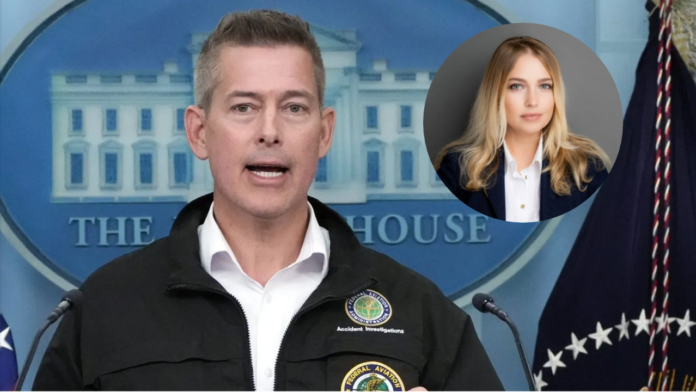
There is a fine line between urgent legislative advocacy and handing hostile foreign powers a free intelligence briefing. On Nov. 13, standing before cameras at the White House after a nationwide Federal Aviation Administration ground stop, Transportation Secretary Sean Duffy crossed that line.
In pushing to secure $50 billion in emergency funding from Congress, Secretary Duffy offered a public diagnosis of our domestic airspace’s weakest points, broadcasting to the world that the United States relies on brittle legacy switches, outdated routers, and decades-old copper lines that overload under pressure and will inevitably fail again.
Securing modern infrastructure for American travelers is high priority. Yet in an era of active conflict abroad and relentless cyber probing, airing the specific hardware vulnerabilities of our national airspace on a global stage is a profound strategic misstep.
Critical infrastructure is national security infrastructure. When a cabinet secretary announces that the backbone of American aviation is hanging by a thread, he is speaking to state-sponsored hackers and intelligence officers watching from overseas. At a moment when the United States is actively engaged in high-stakes operations across multiple theaters, advertising precisely where our domestic networks can be choked invites probing and exploitation.

For me, the stakes of operational discretion are deeply personal. As the mother of a college student Midshipman at the United States Naval Academy, I watch as individuals are trained to shoulder the weight of our national defense with quiet resolve, discipline, and an unwavering commitment to operational security. What makes Secretary Duffy’s public hand-wringing especially jarring is the stark contrast it presents against the quiet, disciplined heroism being demonstrated by the men and women of our armed forces, the service my son is preparing to lead.
Consider the extraordinary operations carried out by U.S. forces in the Persian Gulf and the Strait of Hormuz.
In April 2026, when adversary forces sought to choke global commerce by seeding the seabed with naval mines, American service members did not hold press conferences lamenting the difficulty of the task or broadcasting the limitations of their hulls. Instead, U.S. Navy SEAL divers and explosive ordnance disposal teams operated in the dark, conducting active underwater bomb disposal alongside unmanned submersibles to locate and neutralize deadly ordnance off the coast, keeping vital maritime arteries open without a single American casualty.
The scale of that courage extends even further into the depths of modern maritime defense. Throughout early 2026, as Congress debated protective legislative frameworks like the Strategic Subsea Cables Act, Navy submarine crews and specialized salvage units undertook clandestine missions to intercept and neutralize deep-sea subversion and tampering against critical undersea fiber-optic communication cables, the hidden digital highways carrying the vast majority of global financial transactions and military intelligence. Operating in silent pressure thousands of feet below the surface, military personnel routinely stare down extreme hazards to protect the nation’s vital data infrastructure from foreign espionage and sabotage, all while the American public remains unaware of the invisible battles being fought on their behalf.
They solve lethal problems first and speak only when the mission is complete.
Governance in Washington should reflect that same strategic discipline. Of course, a free democracy requires transparency, and Congress holds the power of the purse. Secretary Duffy is right to demand that lawmakers finish replacing legacy hardware before another shutdown strands thousands of flyers.
However, there is a mature, responsible way to prosecute that case: Deliver technical vulnerability assessments behind closed doors in classified briefings to congressional committees, while projecting strength and control to the public.
Our adversaries are always watching, measuring American resolve and scanning for seams in our armor. The U.S. military shows us what true strength looks like: Confronting danger with courage, intellectual excellence, and discretion. Our leaders in Washington owe the country the wisdom to do the same.
Sarah Ayers, MBA, resides in Melbourne and is a United States Naval Academy mother.

The Space Coast Rocket publishes letters to the editor and guest columns from readers. The views expressed are those of the author. Featured photo: Olga Ernst / Wikimedia Commons (CC BY-SA 4.0), cropped.
Criminal Defense
Bankruptcy · Evictions
WICKS LAW P.A.
Call or text for
free consult
321-733-2700
Eric Wicks, Esq.
1250 West Eau Gallie Blvd. G
Melbourne, FL 32935
Abogado Wicks habla español